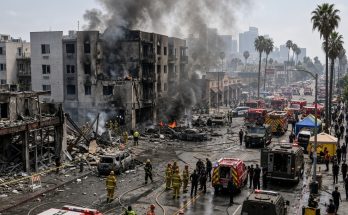
JERUSALEM — Strategic command centers and civilian defense installations across Israel transitioned to an emergency footing on Tuesday as defense officials moved to verify widespread, unconfirmed reports of a series of coordinated strikes penetrating sovereign airspace, threatening to ignite an already combustible regional theater.
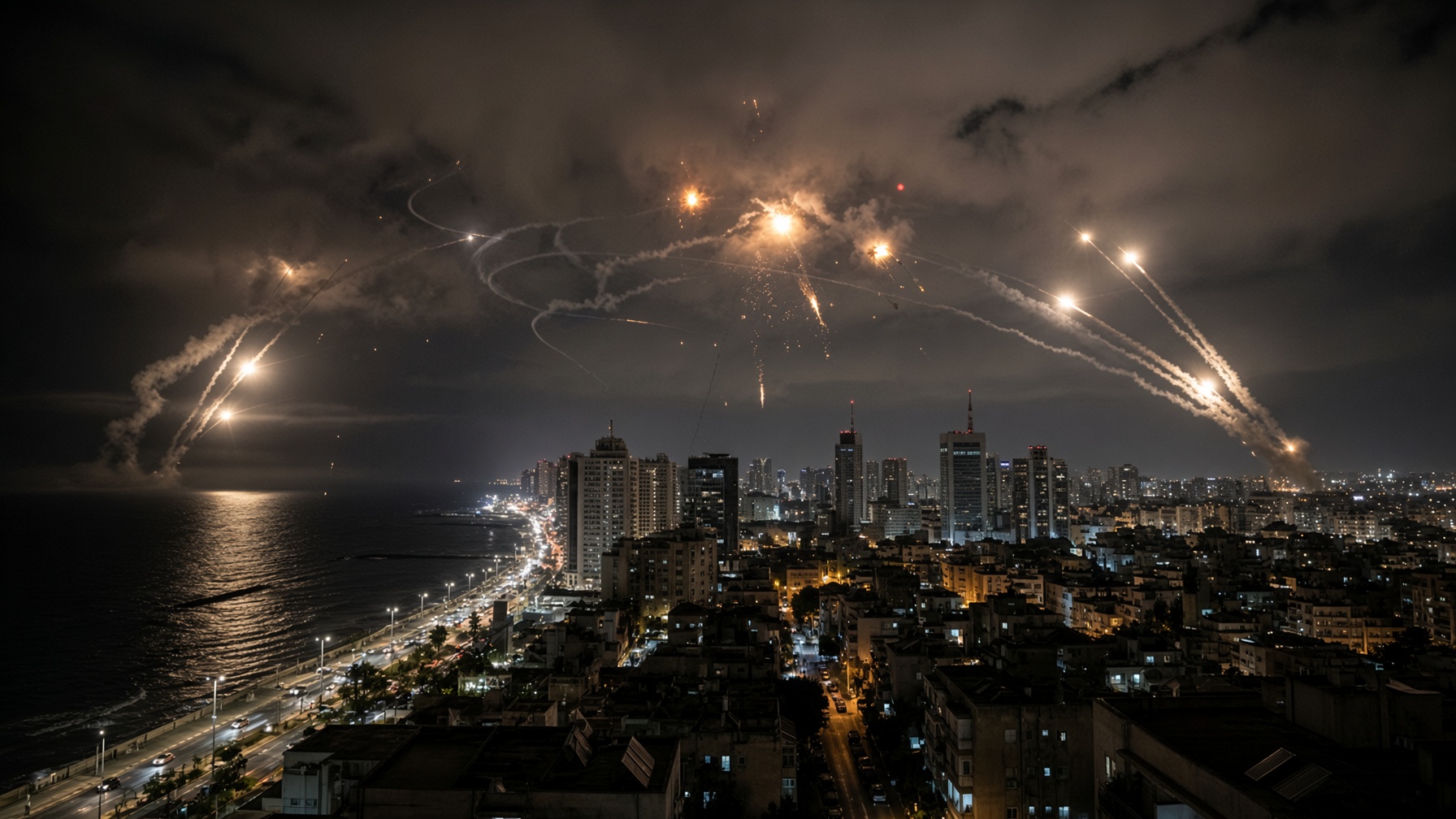
Emergency alert networks sounded, and residents in metropolitan and border corridors reported a flurry of audible concussions, low-frequency rumbles, and unusual aerial activity overhead. The sudden escalation triggered immediate air-raid protocols, sending thousands into reinforced communal shelters while multi-layered missile defense batteries shifted to maximum operational readiness.
While defense authorities and intelligence commands have yet to release a definitive public accounting of the impact zones, the tactical disruption has set off alarms across the international community, where fears of a multi-front regional escalation have remained at a persistent peak.
Fog of War and Early Verification Efforts
The initial hours following the reported incidents have been characterized by operational ambiguity, as early-warning radar arrays and intelligence units sift through competing streams of telemetry, sensor logs, and eyewitness reports.
Civilian accounts described rapid flashes illuminating the night sky, accompanied by the distinct acoustic signatures of high-altitude kinetic intercepts. However, identifying the precise origin and trajectory of the incoming threats has proven technically complex. Analysts caution that the hostile signatures could range from low-flying cruise missiles and long-range loitering munitions to salvos of medium-range ballistic projectiles fired from external territories.
Defense analysts are currently weighing two primary operational hypotheses:
State-Sanctioned Intervention: A coordinated salvo executed directly or via covert logistical command by regional adversaries seeking to probe tactical response thresholds and test the coverage density of Israeli air-defense envelopes.
Decentralized Proxy Action: An opportunistic offensive launched by allied non-state militia factions dispersed throughout the regional perimeter, calculated to exploit shifting diplomatic postures and fracture ongoing stabilization talks.
The operational challenge facing Israeli commanders lies in distinguishing verified kinetic penetration from sensor anomalies, electronic countermeasures, or viral digital rumors designed to sow public panic. In an environment where social media feeds circulate unvetted video fragments within seconds, military planners emphasize that prematurely attributing responsibility carries profound operational risks.
A Regional Powder Keg Under Structural Strain
The timing of the reported barrage arrives against the backdrop of months of accelerating deterioration across the Middle East. Historic friction points have deepened as fragile ceasefires along northern and southern borders have fractured under the weight of continuous tit-for-tat skirmishes.
Diplomatic ties that once offered backchannel off-ramps are strained thin, leaving little buffer between localized skirmishes and open regional conflict. Israel has long occupied the focal point of these complex geopolitical crosscurrents, where security doctrines dictate zero tolerance for existential or deep-theater incursions.
“We are examining an operational landscape that resembles a powder keg waiting for an errant spark,” said a senior regional security analyst. “Any strike against Israeli territory—whether confirmed as state-directed or militia-driven—generates strategic shockwaves that reach far beyond national borders. If the response thresholds are triggered, multiple sovereign nations could be pulled into direct conflict, regardless of their immediate diplomatic preferences.”
The geographic chessboard includes a multitude of actors: Iranian command nodes, Lebanese border positions, Syrian territory, and an array of Iraqi and Yemeni militias, each operating with distinct ideological agendas, specialized weapons arsenals, and strategic calculations. Intelligence services across allied capitals are operating continuously to ascertain whether the latest event represents an isolated harassment attempt or the opening phase of a synchronized, multi-theater campaign.
The Strategic Dilemma of Retaliation
Inside Israeli security cabinets, military and political leaders are evaluating contingent response matrices, confronting the perennial operational dilemma: calibrating the scale and velocity of counterstrikes.
A disproportionate or rapid offensive launched without incontrovertible attribution risks triggering a massive, uncontrolled spiral of escalation, drawing ballistic retaliation from regional state militaries and overwhelming civil-defense infrastructure. Conversely, excessive caution or delayed response risks being interpreted by hostile actors as a breakdown in core deterrence, potentially inviting follow-on saturation barrages.
International diplomats have already launched rapid backchannel efforts, calling for immediate strategic restraint. Foreign ministries in Washington, London, and regional capitals have urged all parties to refrain from unilateral kinetic moves until forensic and forensic telemetry assessments are finalized.
Despite international appeals for calm, domestic pressure to establish firm deterrence remains high. In the streets of Tel Aviv, Haifa, and southern municipalities, normal civic routines have halted. Border crossings have seen immediate tightening, airspace transit corridors have been rerouted, and international news networks have shifted to rolling coverage.
An Indivisible Moment of Crisis
For the civilian populations watching from shelters and living rooms, the tension is palpable. The uncertainty underscores the profound fragility of the contemporary Middle Eastern security architecture, where months of diplomatic posturing can be rendered obsolete in a matter of minutes by a single tactical salvo.
The coming hours will prove decisive in establishing whether this episode marks another contained flare-up along the periphery or the catastrophic opening chapter of a wider regional war. As military investigators examine physical debris, cross-reference early-warning sensor tracks, and formulate their briefings, the path forward rests entirely on the decisions made behind closed command doors.
Whether the region navigates this turning point through sudden diplomatic de-escalation or descends into unprecedented multi-national combat remains poised on an knife-edge, with the margin for error effectively reduced to zero.