ESCONDIDO, Calif. — A 69-year-old Army veteran whose home became a recognizable neighborhood landmark because of its American flags and prominent support for President Donald Trump has died following a violent assault outside his Southern California residence. His death has intensified public attention surrounding the case, as prosecutors pursue a murder charge against the man accused of attacking him.
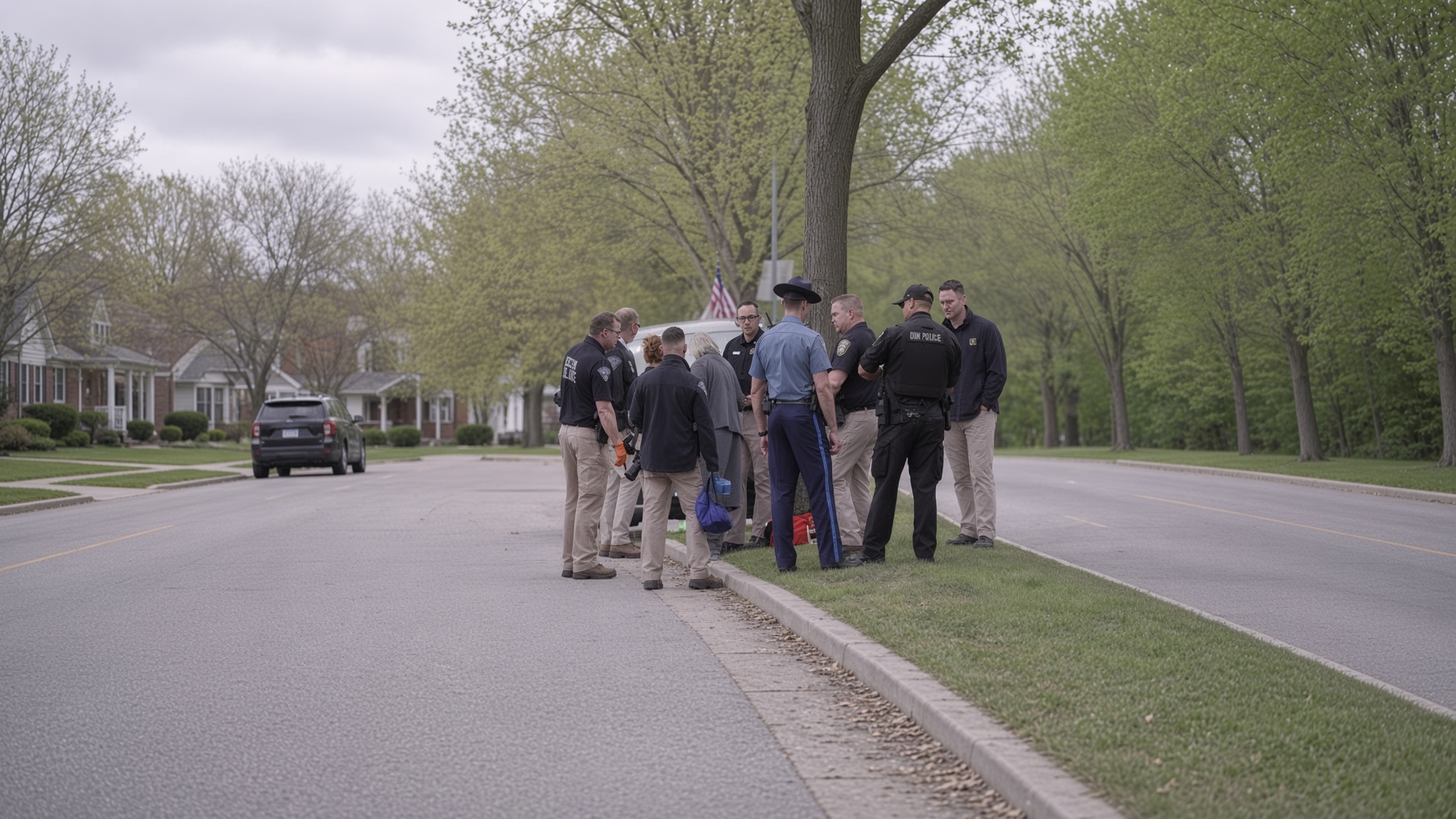
Kerry George Sheron was assaulted on May 20 near East Mission Avenue and Buchanan Street in Escondido, according to authorities. Responding officers found Sheron suffering from serious injuries and arranged for him to receive emergency medical treatment. He remained in critical condition for several days before dying on May 24.
Thomas Caleb Butler, 32, was arrested in connection with the incident. He initially faced several charges, including attempted murder, elder abuse, criminal threats and battery. Following Sheron’s death, prosecutors amended the case to include a murder charge.
Butler has pleaded not guilty. The allegations against him have not been established as proven facts, and the case must proceed through the judicial system before his criminal responsibility can be determined.
The circumstances surrounding the confrontation, the events leading up to the alleged assault and the question of whether political hostility played any role remain important aspects of the case.
🇺🇸 A Neighborhood Landmark Known as the ‘Trump House’
For years, Sheron’s residence stood out in the Escondido neighborhood because of its extensive display of American flags, Trump flags and other patriotic and political decorations.
The property became widely recognizable among nearby residents, with some referring to it as the “Trump House” because of its unmistakable political identity.
Family members described Sheron as a committed supporter of Trump, and the decorations outside his home reflected his willingness to express his political convictions publicly.
The residence’s appearance subsequently became a prominent feature of public discussion following the fatal assault, drawing attention to the intersection of political expression, community tensions and personal safety.
However, the property’s political symbolism does not establish why the confrontation occurred.
Although questions have been raised about whether Sheron’s political views or the decorations outside his home contributed to the incident, authorities have not established that the assault was politically motivated.
Investigators must examine the available evidence before determining whether ideology played any role. Establishing a motive requires more than examining a person’s political beliefs or the appearance of their residence.
Until supporting evidence emerges, claims that Sheron was attacked because of his support for Trump remain unconfirmed.
⚖️ Prosecutors Upgrade Charges After Sheron’s Death
The case took a significant turn when Sheron died four days after the alleged assault.
Initially, Butler faced charges that included attempted murder, elder abuse, criminal threats and battery. Following the veteran’s death, prosecutors moved to add a murder charge, reflecting the fatal outcome of the incident.
San Diego County District Attorney Summer Stephan announced the murder charge after Sheron’s death.
According to allegations described by prosecutors and local reports, Butler punched Sheron, causing him to fall to the ground, and allegedly continued striking him.
A bystander reportedly attempted to intervene during the confrontation and was also injured.
Authorities have said Butler left the area after the incident but was located and arrested nearby.
These allegations will be examined as the case progresses. Witness testimony, medical evidence and other investigative findings may help establish the sequence of events, the nature of the injuries and the circumstances that ultimately led to Sheron’s death.
The prosecution must establish the charges through the legal process, while the defense has the opportunity to challenge the evidence presented against Butler.
The murder charge represents a major development in the proceedings, but it does not constitute a finding of guilt.
🔎 Political Motive Remains Unconfirmed
One of the most closely watched questions surrounding the case is whether Sheron’s political identity played any part in the confrontation.
Because his home was known for its visible support of Trump, the circumstances have prompted discussion about the potential role of political hostility.
Sheron’s wife and others have reportedly questioned whether the property’s prominent decorations could have contributed to the incident.
Nevertheless, investigators must distinguish between questions raised by the circumstances and conclusions supported by evidence.
A person’s political affiliation, the flags displayed outside a home or the opinions expressed publicly cannot independently establish a motive for violence.
Determining whether the confrontation stemmed from a personal dispute, political hostility or another set of circumstances requires reliable evidence.
Authorities have not established a definitive political motive, and the available allegations should not be treated as proof that the attack was connected to Sheron’s support for Trump.
The distinction is particularly important in a case that has attracted attention beyond the local community and become part of a wider discussion about political division in the United States.
🏛️ Psychiatric Evaluation Adds Another Dimension to the Case
Court proceedings have also included a suspension of the criminal case while Butler underwent a psychiatric evaluation to determine whether he was mentally competent to stand trial.
Competency evaluations address whether a defendant can understand the legal proceedings and meaningfully assist in their own defense.
Such an assessment is separate from the question of guilt. It does not, by itself, establish whether a defendant committed the alleged offense or explain the circumstances behind an attack.
Similarly, reports identifying Butler as a Navy veteran do not independently explain his alleged actions. Sheron’s Army service and Butler’s reported military background are details about their respective histories, not evidence establishing a motive.
Any conclusions about the confrontation must rest on the facts developed during the investigation and presented in court.
The proceedings will determine how the case moves forward and whether Butler is competent to participate in the trial process.
🕊️ A Family Seeks Answers as the Community Awaits Justice
Sheron’s death has left his family and community facing the loss of a veteran whose distinctive home had become a familiar sight in Escondido.
For those who knew him, the residence represented a visible expression of his patriotism and political beliefs. Following the fatal assault, that familiar landmark has become associated with a criminal case that continues to raise difficult questions.
The incident has also renewed broader discussions about public safety, political expression and the importance of allowing evidence to guide public understanding of violent events.
For prosecutors, the immediate challenge is to establish the facts supporting the murder charge and present the evidence necessary to prove their allegations.
For the defense, the legal process provides an opportunity to contest those allegations and ensure that the proceedings comply with established legal standards.
For the community, the unanswered questions include what led to the confrontation, whether a specific motive can be established and how the events unfolded before Sheron’s fatal injuries.
Ultimately, the central issue is accountability based on evidence rather than speculation.
Sheron’s death has brought a painful loss to his family, while the criminal case remains unresolved. Whether political hostility played any role in the alleged assault has yet to be established.
As proceedings continue, the court will determine the legal questions surrounding Butler’s case. Until then, the allegations must remain distinct from proven facts, and the circumstances surrounding Sheron’s death must be examined through a thorough and fair judicial process.