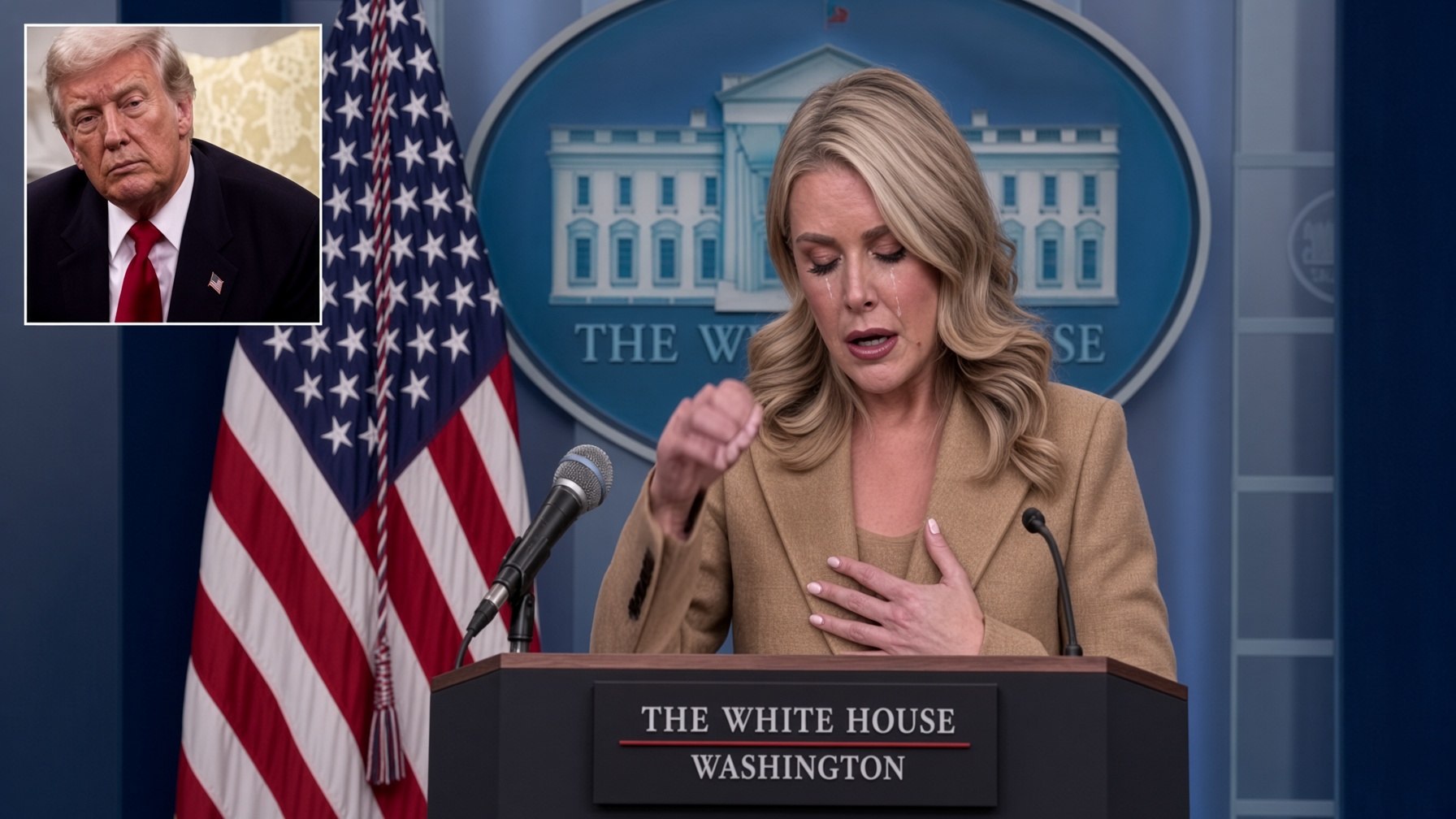
WASHINGTON — White House Press Secretary Karoline Leavitt mounted an aggressive defense of the administration’s overhaul of presidential press access during an on-stage forum with Axios co-founder Mike Allen, arguing that dismantling traditional press pool arrangements modernizes coverage rather than curtails journalistic scrutiny.
The sharp exchange highlighted a deepening institutional battle between the executive branch and legacy news organizations over who holds the authority to decide which reporters board Air Force One, enter the Oval Office, and staff the protective pool tracking the commander-in-chief. At the center of the dispute is the administration’s decision to revoke the Associated Press’s permanent, guaranteed seat within that traveling cohort.
The controversy touches foundational questions of executive transparency, First Amendment conventions, and whether century-old protocols can survive an era where digital creators and alternative outlets compete directly with global wire services for West Wing credentials.
The Battle Over the Historical Record
During the forum, Allen pressed Leavitt on whether eroding the AP’s dedicated role damages the historical record of the American presidency. To illustrate the indispensability of continuous access, Allen pointed to AP chief photographer Evan Vucci’s iconic image of Donald Trump raising his fist beneath an American flag after surviving the July 2024 assassination attempt in Butler, Pennsylvania. That photograph—captured because a veteran wire photojournalist was stationed feet from the podium within the traveling pool—became an indelible visual record of modern political history.
Leavitt rejected the premise that ending the wire service’s automatic privilege constitutes an attack on the press.
“Why should one legacy entity have an unchallengeable, permanent monopoly over a seat that belongs to the wider press corps?” Leavitt asked, arguing that audience consumption habits have fundamentally shifted and that government access protocols should reflect an expanding digital ecosystem.
Under the traditional pool architecture, a tight rotation of print, wire, radio, and television reporters accompanies the president in restricted spaces, feeding dispatches, transcripts, and pool photos to thousands of newsrooms worldwide that lack the logistical budget to deploy full-time traveling teams.
While administration allies frame the restructuring as an overdue democratization of access for independent journalists, media historians and press watchdogs warn that stripping dedicated wire seats imperils non-partisan, moment-to-moment documentation during international crises and domestic emergencies.
Challenging the gatekeepers
The debate soon turned to the operational authority of the White House Correspondents’ Association (WHCA), the independent, journalist-run body that has organized pool logistics, seat distribution, and credential rotations for decades without government intervention.
Allen underscored the democratic principle that political officials should never choose the journalists assigned to hold them accountable. The WHCA and press advocates maintain that allowing the executive branch to curate its own traveling pool creates a coercive dynamic, inviting administrations to reward flattering outlets with proximity while banishing critical reporters to the perimeter.
Leavitt dismissed the WHCA’s traditional stewardship, contending that an unelected trade association should not exercise a monopoly over access to executive spaces, Air Force One cabins, or secure military facilities. She argued that the executive branch retains the inherent authority to regulate spatial limits, vetting requirements, and logistics inside the White House complex.
Press freedom scholars caution that administrative control over pool rosters sets a dangerous precedent, transforming an essential watchdog mechanism into a transactional tool to enforce editorial compliance.
“This is about democratizing access, not restricting it,” Leavitt countered, arguing that the White House has opened its doors to a wider variety of voices, including digital-first creators, regional outlets, and independent commentators who have historically been excluded by legacy gatekeepers.
A Defiant Defence of Access Metrics
Leavitt firmly pushed back against accusations that the policy change targets hostile outlets, pointing to the continued daily presence of traditional television networks and legacy broadsheets inside the James S. Brady Press Briefing Room. She framed the administration’s media posture as remarkably open, citing figures referenced by Allen showing Trump had participated in 468 combined press conferences and interviews at a comparable point in his term, compared to 164 for former President Joe Biden.
Journalism analysts note, however, that volume alone does not guarantee accountability. Unstructured exchanges shouted over whirring helicopter engines on the South Lawn or appearances on friendly cable panels offer vastly different scrutiny than formal, solo press conferences featuring sustained follow-up inquiries from seasoned beat reporters.
Moreover, critics argue that using raw quantitative numbers of appearances can mask targeted exclusions and the strategic bypassing of organizations that ask more probing questions.
“We believe in access, but we don’t believe in the old entitlement,” Leavitt added, summarizing the administration’s view. “The media landscape has changed forever, and the way we provide access is going to change with it.”
The Existential Stake
The conflict over pool credentials represents a consequential shift in the relationship between the presidency and the press. As the administration systematically rewrites decades of access norms, the confrontation will ultimately determine whether White House reporting remains protected by collective, independent newsroom standards or becomes subject to the discretionary control of the executive branch.
Historically, the independence of the traveling press has served as a buffer, ensuring that the visual and textual history of the presidency is recorded without editorial filtering by the State. Press freedom groups maintain that once a president holds the pen on who can join the pool, the watchdogs risk being replaced by cheerleaders.
With both the administration and the correspondents’ association dug in, the stand-off shows no signs of an early resolution. As the traveling pool faces further unravelling, the outcome will have lasting implications for how the public receives moment-to-moment, independent documentation of the country’s highest office, testing whether traditional journalistic standards can survive an era of executive re-definition.