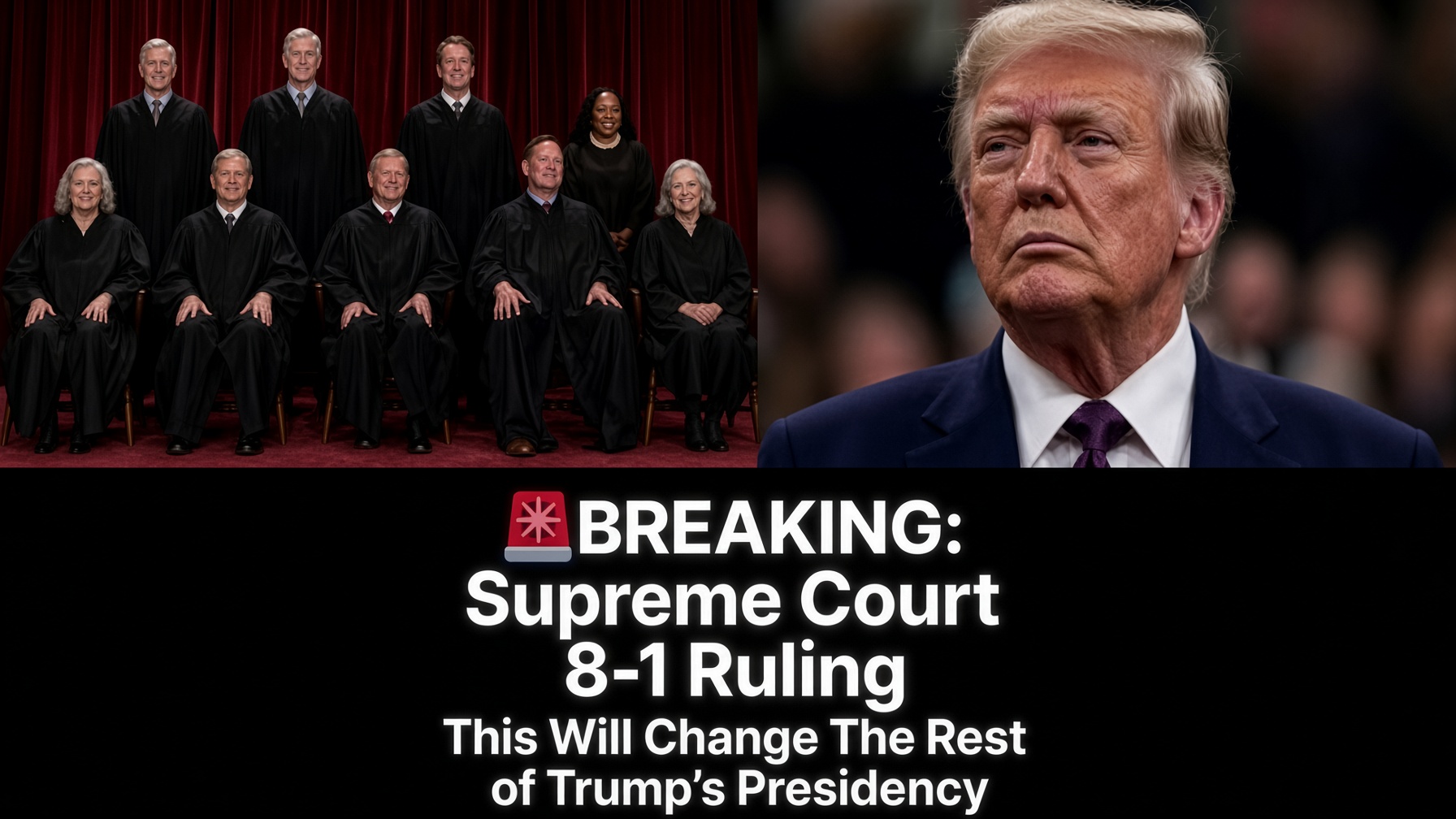
WASHINGTON — In a landmark ruling that sharply curtails the extraterritorial reach of the federal judiciary, the U.S. Supreme Court held 6–3 on Tuesday that foreign plaintiffs cannot deploy historic federal human rights statutes to sue American corporations for allegedly aiding and abetting abuses carried out on foreign soil.
The decision in Cisco Systems, Inc. v. Doe delivers a decisive victory to domestic technology leaders and defense contractors, effectively insulating multinational corporations from civil tort liability in U.S. courts over commercial partnerships, hardware sales, and technical support provided to authoritarian governments abroad.
Writing for the conservative majority, Justice Amy Coney Barrett ruled that the federal courts lack constitutional authority to craft common-law causes of action under the Alien Tort Statute (ATS) of 1789, while concluding that the Torture Victim Protection Act of 1991 (TVPA) does not extend to secondary aiding-and-abetting liability. Barrett was joined by Chief Justice John Roberts and Justices Clarence Thomas, Samuel Alito, Neil Gorsuch, and Brett Kavanaugh.
“Today, we close the door that Sosa cracked and hold that courts may not create new causes of action for violations of international norms,” Barrett wrote, referring to the high court’s 2004 benchmark in Sosa v. Alvarez-Machain. “We also hold that the Torture Victim Protection Act of 1991, which contains an express cause of action, does not provide for aiding-and-abetting liability.”
Silicon Valley in China’s Surveillance State
The litigation originated from claims brought by anonymous practitioners of Falun Gong, a spiritual discipline banned and aggressively suppressed by the Chinese government. The plaintiffs claimed they endured systematic digital surveillance, arbitrary detention, forced labor, and severe physical torture at the hands of state security forces. They argued that these human rights violations were deliberately facilitated and optimized by San Jose-based networking giant Cisco Systems and its executive leadership.
According to the complaint, Cisco engineers customized routing hardware and developed specialized software modules for Beijing’s nationwide digital panopticon, known as the “Golden Shield” project. The plaintiffs argued that corporate personnel tailored these surveillance tools to catalog, intercept, and trace Falun Gong adherents, fully aware that the resulting data would be used to carry out state-sponsored persecution.
A California federal district court initially dismissed the complaint for lack of subject-matter jurisdiction. However, the U.S. Court of Appeals for the Ninth Circuit reversed that decision, ruling that both the ATS and the TVPA permitted secondary aiding-and-abetting claims against U.S. corporations that knowingly assist in gross violations of customary international law. Tuesday’s Supreme Court verdict directly repudiates the appellate panel’s interpretation.
Separation of Powers and Foreign Relations
Barrett anchored the majority’s reasoning in constitutional separation-of-powers principles, writing that the authority to establish private rights of action for money damages resides exclusively within the legislative branch. Permitting unelected judges to fashion civil torts based on evolving international norms, the majority reasoned, risks dangerous judicial encroachment into diplomatic affairs—a constitutional sphere assigned to the president and Congress.
Because the ATS serves merely as a jurisdictional mechanism rather than an independent source of substantive law, and because the TVPA’s statutory language omits any explicit reference to secondary liability, the court ruled the lawsuit could not proceed.
The majority adopted core arguments advanced by the Department of Justice. In amicus briefs and oral arguments supporting Cisco, the Solicitor General’s office warned that hauling domestic enterprises into federal court over commercial transactions abroad undermined executive foreign policy, invited reciprocal litigation against U.S. entities in overseas courts, and disadvantaged American technology firms competing in global markets.
Corporate defense litigators and commercial trade coalitions celebrated the outcome, describing it as an essential halt to decades of complex litigation that threatened multinational firms with immense class-action liability for the actions of sovereign foreign states.
Sharp Dissents from the Liberal Wing
The court’s three liberal justices dissented, warning that the ruling effectively immunizes corporations that commercially profit from atrocities committed abroad.
Authoring the principal dissent, Justice Sonia Sotomayor, joined by Justice Elena Kagan, argued that the TVPA’s authorization of lawsuits against any individual who “subjects an individual to torture” naturally encompasses intentional facilitation under settled common-law tort definitions.
“Because the plain text of this statute includes individuals who aid and abet the victim’s torture, I would affirm the Ninth Circuit’s judgment on this score as well,” Sotomayor wrote, contending that the majority had constructed an unwarranted corporate liability shield nowhere found in the text passed by Congress.
Justice Ketanji Brown Jackson authored a separate opinion concurring in part and dissenting in part, joined by Kagan, arguing that Congress enacted the TVPA to provide a definitive federal forum for victims of state atrocities, with a remedial reach that naturally encompassed secondary actors who provide material operational support.
The ruling represents the culmination of a two-decade retrenchment from transnational human rights litigation that began with Sosa and hardened through Kiobel v. Royal Dutch Petroleum Co. and Nestlé USA, Inc. v. Doe. By rejecting secondary liability under both foundational statutes, the court has drawn an unambiguous bright line: absent clear, affirmative authorization from Congress, foreign victims of state-sanctioned abuses cannot pursue civil restitution against American corporations in federal court.