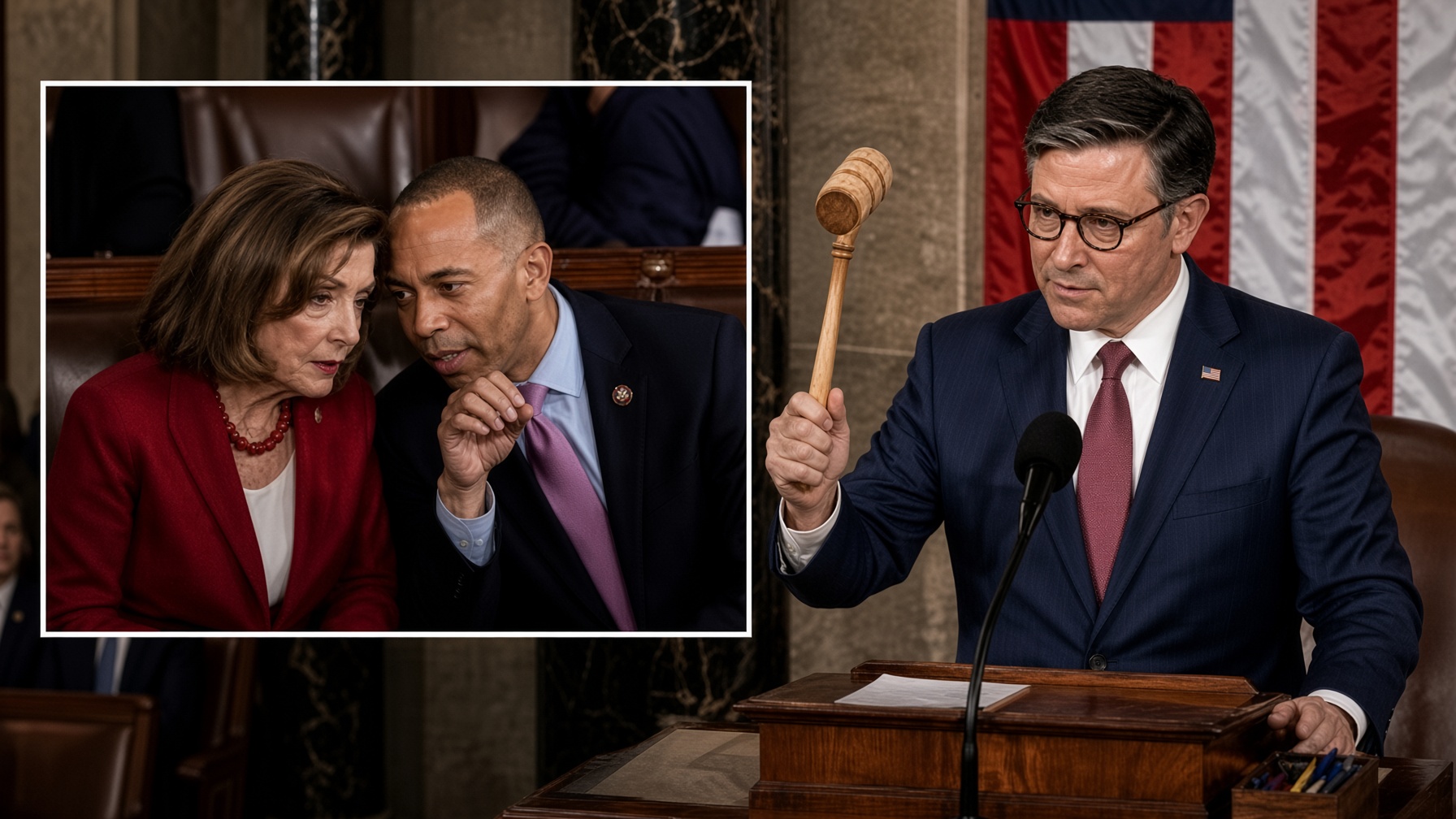
🏛️ HOUSE PASSES BILL TO CRACK DOWN ON FRAUDULENT FEDERAL PAYMENTS AS TAXPAYER LOSSES MOUNT
WASHINGTON, D.C. — The Republican-controlled U.S. House of Representatives has approved legislation aimed at strengthening safeguards against fraudulent and improper federal payments, advancing a proposal designed to prevent taxpayer money from being distributed to ineligible recipients before problems are detected.
The Stopping Fraudulent Payments Act passed the House by a vote of 218–200, according to the provided account. Introduced by House Oversight Committee Chairman James Comer, a Republican from Kentucky, the legislation seeks to change how federal agencies identify and respond to suspicious payment requests, shifting the government’s approach from recovering money after it has been lost to preventing questionable payments before funds are released.
The measure addresses longstanding concerns about the federal government’s so-called “pay and chase” system, under which agencies may distribute funds before fully verifying a recipient’s eligibility. When fraud or administrative errors are discovered afterward, officials must pursue repayment, an often complicated process that does not always result in the recovery of the money.
Supporters argue that strengthening preventive controls could help protect public funds, improve government accountability and reduce the financial burden on American taxpayers.
“Congress must take further action to stop fraud before it happens,” Comer said on the House floor. He argued that the legislation would introduce additional protections to help ensure federal payments reach the correct recipients in the appropriate amounts.
💰 BILL AIMS TO PREVENT LOSSES BEFORE MONEY LEAVES GOVERNMENT ACCOUNTS
Under the proposed legislation, federal agencies would receive greater authority to pause, condition or divide certain payments when available information indicates an elevated risk of fraud, improper disbursement or administrative error.
Rather than automatically approving every payment request that passes through existing procedures, agencies could use risk indicators and additional verification measures to examine potentially questionable transactions.
The U.S. Treasury Department would also have a more active role in reviewing flagged payment requests. Under the proposal, the department could return suspicious requests for additional examination, allowing agencies to investigate concerns before taxpayer money is distributed.
One tool central to these efforts is the federal government’s Do Not Pay database, which helps agencies identify potentially ineligible recipients and other payment risks by checking information against available records.
Supporters say expanding the use of such tools could help officials detect inconsistencies earlier, reduce opportunities for fraud and improve coordination among government departments.
However, the proposal also raises questions about how agencies would distinguish fraudulent activity from legitimate payment requests that contain errors or require additional documentation. Effective implementation would be essential to ensure that eligible Americans do not experience unnecessary delays in receiving benefits or payments.
📊 IMPROPER PAYMENTS REMAIN A MAJOR GOVERNMENT CONCERN
The legislation comes amid continuing concerns about the scale of improper payments across federal programs.
The figures cited in the legislation’s supporting account place improper payments at approximately $186 billion in fiscal year 2025, an increase of $24 billion from the previous year. Cumulative improper payments since 2003 have reportedly approached $3 trillion.
These figures encompass a broad range of payment problems, including money distributed to ineligible recipients, incorrect payment amounts and other errors that result in funds being paid improperly.
Importantly, improper payments are not necessarily all fraudulent. Some result from administrative mistakes, incomplete records, outdated information or failures to follow program requirements. Nevertheless, the scale of the problem has intensified calls for stronger oversight and more effective safeguards.
Programs such as Social Security, Medicare and various federal assistance initiatives involve substantial sums of public money and complex eligibility requirements. Weaknesses in verification procedures can expose these programs to improper payments, while overly restrictive controls can create difficulties for people who legitimately depend on government assistance.
Supporters of the bill contend that improving payment verification would help address both concerns by directing resources toward eligible recipients while limiting opportunities for abuse.
REPUBLICANS EMPHASIZE ACCOUNTABILITY AND GOVERNMENT EFFICIENCY
House Budget Committee Chairman Jodey Arrington, a Republican from Texas and an original cosponsor of the legislation, also emphasized the importance of protecting public funds.
Arrington argued that the government must maintain stronger safeguards as substantial amounts of federal money flow through programs administered by federal agencies and state and local governments.
The bill is part of a broader legislative effort involving 11 measures from the House Oversight Committee that address different vulnerabilities in government programs, including student aid fraud and improper payments.
Republican supporters have connected the legislation to wider efforts to improve government efficiency, strengthen financial oversight and eliminate waste, fraud and abuse.
The central objective is to make fraud prevention a more prominent part of the payment process rather than relying primarily on investigations and recovery efforts after questionable transactions have occurred.
If implemented effectively, supporters believe the approach could help agencies use existing resources more efficiently and reduce the amount of public money lost through preventable errors and fraudulent claims.
⚖️ DEMOCRATIC OPPOSITION AND THE ROAD AHEAD
The measure encountered opposition from Democrats, with nearly all members of the party reportedly voting against it. The final vote reflected the broader partisan divisions surrounding federal spending, government oversight and the administration of public programs.
While Republicans have presented the legislation as a necessary safeguard for taxpayers, its effectiveness will ultimately depend on how its provisions are implemented and whether agencies can apply additional scrutiny without disrupting legitimate payments.
The bill now advances to the U.S. Senate, where lawmakers will have the opportunity to consider its provisions and determine whether it should become law.
Passage in the House does not guarantee enactment, and the legislation’s future will depend on the Senate’s response and any subsequent legislative action.
For supporters, the measure represents an effort to establish stronger financial controls before taxpayer money is distributed. For federal agencies and beneficiaries, the challenge will be ensuring that tighter safeguards prevent abuse without creating unnecessary bureaucratic obstacles.
As lawmakers continue debating how to reduce improper payments, the broader issue remains clear: protecting public funds requires effective oversight, accurate eligibility checks and systems capable of identifying suspicious transactions before they become costly problems.
The next major test will be whether Congress can turn the proposed safeguards into practical protections that reduce losses while preserving timely access to legitimate federal payments.