🚨 Trump’s Confrontation With the Press Sparks Renewed Debate Over First Amendment Rights
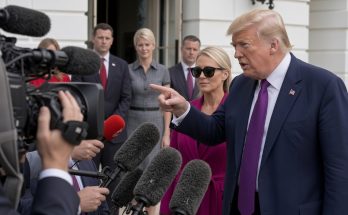
WASHINGTON, D.C. — The relationship between President Donald Trump and the American news media remains a focal point of national debate, raising consequential questions about press freedom, executive authority, and the role of independent journalism in a functioning democracy. As political tensions intensify, press-freedom advocates, constitutional scholars, and newsroom leaders are confronting a difficult challenge: how to protect journalists from intimidation while rebuilding public confidence in the institutions responsible for holding powerful figures accountable.
What was once widely understood as a contentious relationship between politicians and reporters has increasingly become a broader debate over the boundaries of presidential power and the constitutional protections afforded to the press. Critics of aggressive political rhetoric argue that attacks on journalists can undermine public confidence in independent reporting and create an environment in which scrutiny of government officials becomes more difficult.
The central concern extends beyond individual confrontations or provocative remarks. It involves whether journalists can investigate public officials, challenge official accounts, and report uncomfortable findings without facing disproportionate political or administrative consequences.
In response, press-freedom advocates are calling for a coordinated strategy built around two priorities: greater transparency in journalism and stronger cooperation among media organizations.
📰 Rebuilding Public Trust Through Transparency
The first challenge begins inside newsrooms.
For decades, many media organizations operated on the assumption that audiences understood the importance of an independent press. However, growing political polarization, declining institutional trust, and the rapid spread of misinformation have made that assumption increasingly difficult to sustain.
Journalists now face pressure not only to report accurately but also to explain how their reporting is produced, why particular sources are considered credible, and how editorial decisions are made.
Media organizations can respond by providing readers with direct access to primary documents, clearly identifying the evidence supporting significant claims, and explaining the verification procedures used in sensitive investigations.
When anonymous sources are necessary, editors should explain why confidentiality was granted and what steps were taken to corroborate the information. When mistakes occur, corrections should be prompt, prominent, and transparent.
These measures cannot eliminate political hostility toward the press, but they can help audiences distinguish documented reporting from speculation, partisan commentary, and unsupported claims.
Transparency also reinforces a fundamental principle: journalism is not supposed to serve the interests of a particular political party. Its responsibility is to inform the public, scrutinize institutions, and provide citizens with the information necessary to evaluate those exercising power.
That responsibility becomes especially important when reporting involves government misconduct, public spending, regulatory decisions, or potential abuses of authority.
⚖️ Why Media Organizations Must Stand Together
The second priority involves cooperation across the news industry.
American media organizations compete intensely for exclusive interviews, breaking stories, advertising revenue, and subscribers. That competition is a defining feature of the industry, but press-freedom advocates warn that excessive fragmentation can leave individual outlets vulnerable when they face political pressure or expensive legal challenges.
If an organization faces a retaliatory lawsuit, restricted access, or an allegedly improper administrative action, other newsrooms may have a compelling interest in examining the circumstances rather than treating the dispute as merely a competitor’s problem.
Advocates identify several practical measures that could strengthen the industry’s collective response.
First, coordinated legal support could help protect vulnerable newsrooms. Large national organizations, journalism foundations, and press-freedom groups could provide legal assistance to smaller publishers and independent reporters facing costly litigation over legitimate reporting.
Second, newsrooms could establish common principles governing access to public officials. Editors would retain their independence while resisting arrangements that condition interviews or exclusive access on favorable coverage. Such agreements would help prevent access to powerful figures from becoming a substitute for editorial judgment.
Third, independent outlets could cooperate when significant public-interest reporting faces attempts at suppression. Where legally appropriate and editorially justified, organizations could share verified documents, corroborating evidence, and reporting resources to ensure that important information remains available to the public.
Fourth, journalists and their professional organizations could strengthen protections for reporters working in the field. Clear procedures for handling threats, subpoenas, harassment, and physical interference would help newsrooms respond consistently when employees encounter dangerous or legally questionable circumstances.
These proposals would not require competing outlets to abandon their editorial differences. Instead, they would establish a shared commitment to protecting the conditions under which independent journalism can operate.
🇺🇸 The First Amendment and the Limits of Government Power
The constitutional stakes are substantial.
The First Amendment protects freedom of speech and of the press, establishing essential safeguards for public debate and government accountability. Although these protections do not exempt journalists from generally applicable laws or legitimate judicial proceedings, they place important limits on government efforts to punish or suppress reporting because of its content or viewpoint.
The federal government also has legitimate responsibilities involving national security, law enforcement, and regulatory oversight. Disputes can arise over how those responsibilities are exercised, particularly when officials take actions that affect media organizations or individual reporters.
Determining whether a particular action crosses a constitutional boundary requires examining the facts, the applicable law, and the circumstances surrounding the decision. Political criticism alone does not establish a First Amendment violation, but neither should claims of government authority prevent meaningful scrutiny of potentially retaliatory conduct.
For that reason, legal oversight, independent courts, transparent procedures, and a willingness to challenge questionable government actions remain essential safeguards.
History also offers a warning about institutional independence. Democratic protections can weaken gradually when intimidation becomes routine, powerful institutions prioritize convenience over principle, or public scrutiny is discouraged through pressure rather than open debate.
Preventing that erosion requires more than statements of support for press freedom. It requires consistent standards, enforceable legal protections, responsible reporting, and public accountability.
🔎 A Defining Test for American Journalism
Ultimately, the debate surrounding Trump and the press reflects a larger question about the relationship between political power and democratic accountability.
News organizations must acknowledge their own mistakes, confront legitimate criticism, and demonstrate that their reporting is grounded in evidence. At the same time, government officials must recognize that independent scrutiny is a normal and necessary feature of constitutional democracy, not a privilege that can be withdrawn whenever coverage becomes uncomfortable.
The challenge facing American journalism is therefore twofold: rebuild public trust through rigorous, transparent reporting while developing stronger institutional safeguards against improper interference.
The First Amendment provides the foundation, but its practical value depends on how consistently its principles are defended.
As tensions between political leaders and news organizations continue, the response from the press may help shape public understanding of accountability, transparency, and the limits of executive authority for years to come.
The ultimate test is not whether journalists agree with those in power. It is whether they remain free to question them—and whether the public can trust that the answers are being pursued with independence, accuracy, and integrity.