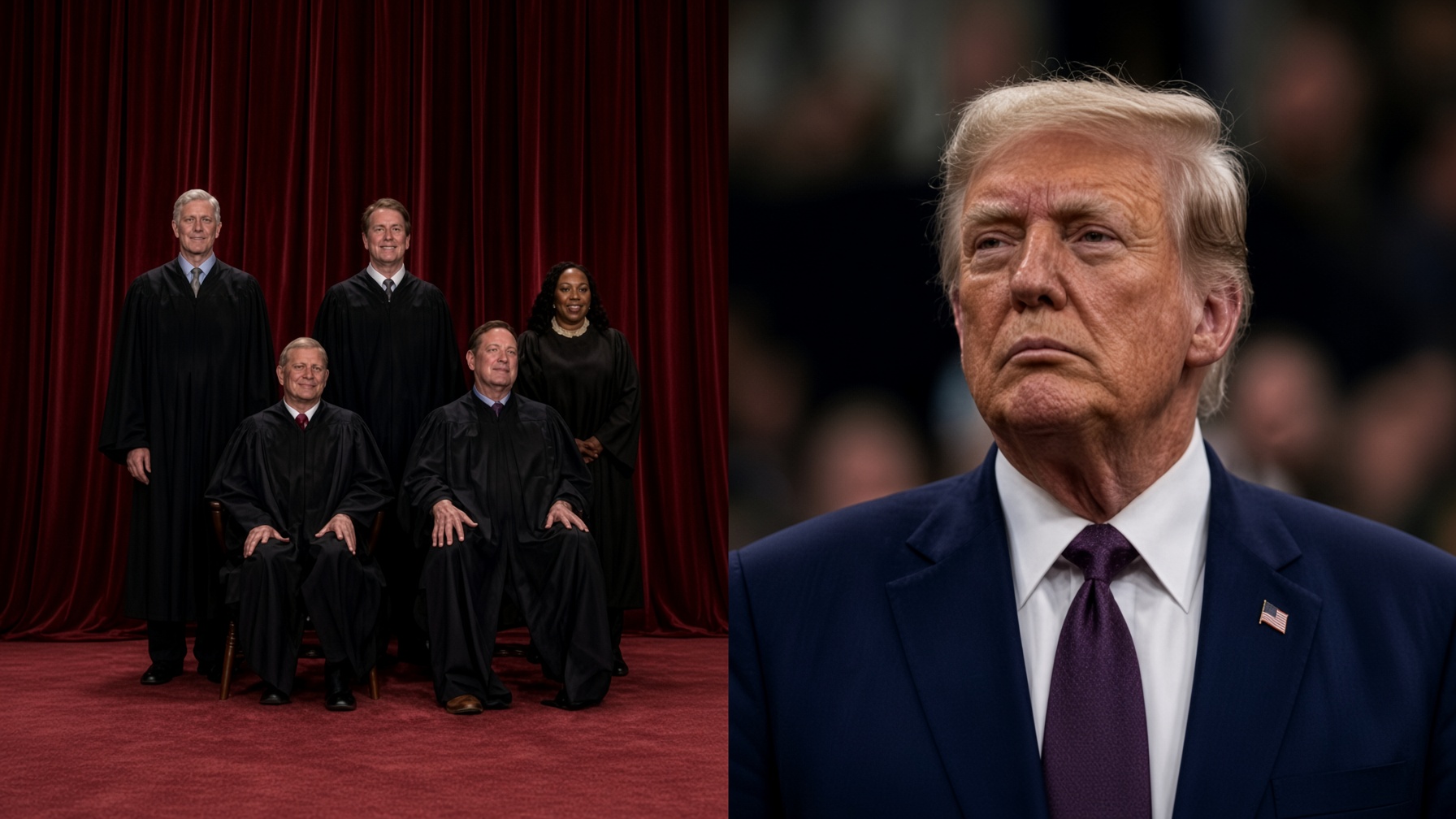
WASHINGTON — In a landmark ruling sharply curtailing the extraterritorial reach of federal courts, the U.S. Supreme Court decided 6–3 on Tuesday that foreign plaintiffs cannot use federal human rights statutes to sue American corporations for allegedly aiding and abetting abuses committed on foreign soil.
The decision in Cisco Systems, Inc. v. Doe substantially insulates multinational technology firms and defense contractors from domestic civil liability stemming from their commercial ties, hardware shipments, and software deployments to repressive foreign regimes.
Writing for the conservative majority, Justice Amy Coney Barrett held that federal courts lack constitutional authority to craft common-law causes of action under the 1789 Alien Tort Statute (ATS) and concluded that the Torture Victim Protection Act of 1991 (TVPA) does not impose secondary aiding-and-abetting liability. Barrett was joined by Chief Justice John Roberts and Justices Clarence Thomas, Samuel Alito, Neil Gorsuch, and Brett Kavanaugh.
“Today, we close the door that Sosa cracked and hold that courts may not create new causes of action for violations of international norms,” Barrett wrote, referencing the court’s 2004 precedent in Sosa v. Alvarez-Machain. “We also hold that the Torture Victim Protection Act of 1991, which contains an express cause of action, does not provide for aiding-and-abetting liability.”
The underlying lawsuit arose from claims filed by anonymous adherents of Falun Gong, a religious and spiritual movement banned and systematically suppressed by the Chinese government. The plaintiffs alleged they were subjected to mass surveillance, arbitrary detention, forced labor, and severe torture. They argued that this persecution was deliberately enabled and optimized by San Jose-based networking giant Cisco Systems and its executives.
According to the complaint, Cisco engineers customized hardware and developed specialized software modules for China’s nationwide surveillance apparatus, the “Golden Shield” project. The plaintiffs alleged the technology was tailored to track, log, and identify practitioners while knowing the data would facilitate systemic abuse.
A California federal district court initially dismissed the suit for lack of jurisdiction. The U.S. Court of Appeals for the Ninth Circuit reversed, holding that both the ATS and the TVPA permitted secondary aiding-and-abetting claims against domestic corporations that knowingly facilitate gross violations of customary international law. Tuesday’s decision wholly repudiates that doctrine.
Barrett anchored the majority’s rationale in separation-of-powers principles, writing that the power to create private rights of action for monetary relief belongs exclusively to Congress. Permitting unelected judges to recognize tort claims based on evolving international customs, the majority held, invites unwarranted judicial entanglement in foreign affairs—a domain constitutionally assigned to the executive branch and Congress.
Because the ATS serves merely as a jurisdictional gateway rather than a source of substantive claims, and because the TVPA’s text lacks express provision for secondary liability, the court ruled the case could not proceed.
The holding embraced arguments presented by the Department of Justice. In oral arguments supporting Cisco, the Solicitor General’s office warned that hauling domestic firms into court over overseas commerce disrupted executive diplomacy, invited reciprocal foreign litigation against U.S. interests, and hindered global technological trade.
Corporate defense attorneys and trade groups welcomed the ruling, hailing the end of decades of litigation that exposed global firms to massive class-action suits over foreign government conduct.
The court’s three liberal justices dissented sharply, warning the ruling shields corporations that profit from human atrocities.
Leading the primary dissent, Justice Sonia Sotomayor, joined by Justice Elena Kagan, argued that the TVPA’s authorization of suits against anyone who “subjects an individual to torture” naturally encompasses intentional facilitation under established tort principles.
“Because the plain text of this statute includes individuals who aid and abet the victim’s torture, I would affirm the Ninth Circuit’s judgment on this score as well,” Sotomayor wrote, arguing the majority engineered a corporate liability shield absent from statutory text.
Justice Ketanji Brown Jackson authored a separate opinion concurring in part and dissenting in part, joined by Kagan, maintaining that Congress drafted the TVPA to provide a reliable federal forum for victims of state violence and that its scope reached those offering material assistance.
Tuesday’s decision marks the culmination of a twenty-year retreat from transnational human rights litigation that began with Sosa and progressed through Kiobel and Nestlé. By rejecting secondary liability under both statutes, the Supreme Court established an unmistakable boundary: without unambiguous congressional authorization, foreign victims of state-sponsored brutality cannot seek restitution from American companies in federal court.