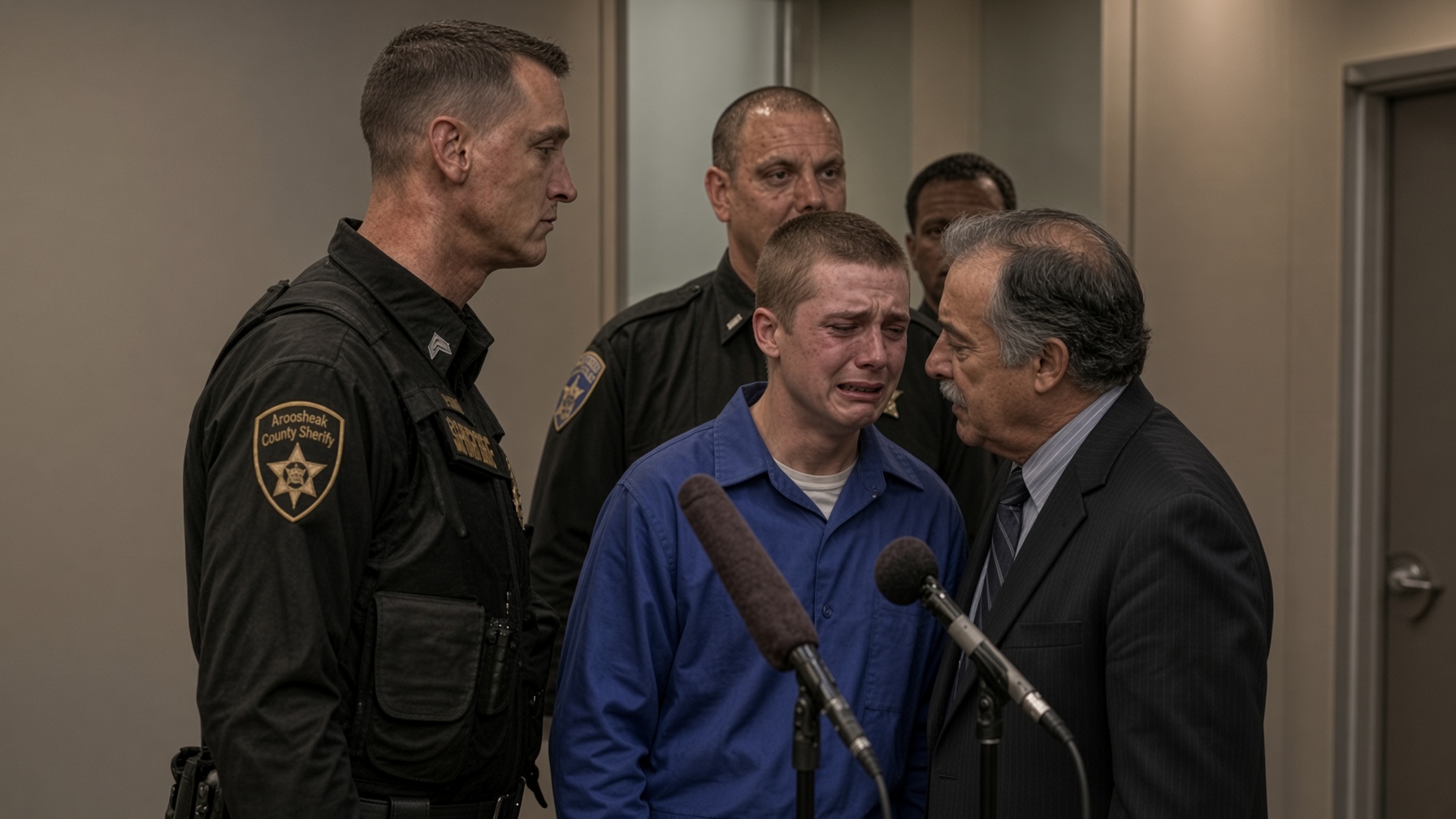
😢⚖️ Teen Sentenced to 452 Years in Prison as Debate Erupts Over Juvenile Justice and Second Chances
COURT DESK — An extraordinary 452-year prison sentence imposed on a teenage defendant has reignited a national debate over juvenile justice, constitutional protections and whether young offenders should retain any possibility of rehabilitation after committing serious crimes.
The sentence, reportedly structured by ordering multiple prison terms to run consecutively, would effectively keep the defendant behind bars for the remainder of his life. The case highlights a longstanding conflict within the American legal system: how to deliver justice for victims of devastating crimes while recognizing that adolescents may possess a greater capacity for change than adults.
The ruling has drawn attention to the constitutional limits of extreme sentences for juvenile offenders, particularly when a lengthy term of years can function as life imprisonment without formally being labeled as such.
However, the specific case details and the reported sentence would need to be independently verified before the ruling could be connected to a particular court or legal precedent.
⚖️ Prosecutors Emphasize the Severity of the Crimes
During the proceedings, prosecutors reportedly argued that the seriousness of the offenses warranted the harshest punishment permitted under applicable law. Their position centered on accountability, public safety and the lasting consequences experienced by victims and their families.
In cases involving severe violence, prosecutors often contend that consecutive sentences are necessary to reflect the gravity of each individual offense rather than treating multiple crimes as a single event.
Victim-impact statements can play an important role in sentencing. Survivors and relatives may describe physical injuries, psychological trauma, financial hardship and the lasting disruption of family life caused by criminal conduct.
For victims and their loved ones, a lengthy prison term may represent recognition of the harm suffered and reassurance that the convicted individual will not pose a future threat to the community.
At the same time, the pursuit of punishment must remain consistent with constitutional requirements, including protections against cruel and unusual punishment.
🧠 Defense Raises Questions About Adolescent Development
Arguments against exceptionally long juvenile sentences frequently rely on scientific research into adolescent brain development and decision-making.
Researchers have found that the brain systems associated with impulse control, risk assessment and long-term planning continue developing into early adulthood. Teenagers may therefore be more vulnerable to peer pressure, emotional reactions and short-term thinking than mature adults.
Defense attorneys in juvenile cases often argue that these developmental differences should influence sentencing decisions, particularly when a punishment would eliminate any realistic opportunity for release.
The argument does not excuse serious criminal behavior or diminish the suffering of victims. Instead, it asks courts to consider whether a young person’s age, circumstances and potential for rehabilitation justify a different approach to punishment.
Critics of extreme sentences also argue that meaningful opportunities for education, treatment and personal development can encourage rehabilitation, even among people convicted of grave offenses.
🏛️ Supreme Court Decisions Shape the Debate
The constitutional dispute surrounding lengthy juvenile sentences has been shaped by several landmark U.S. Supreme Court decisions.
In Roper v. Simmons (2005), the court prohibited the death penalty for crimes committed by individuals under 18.
Five years later, Graham v. Florida (2010) barred life imprisonment without parole for juveniles convicted of non-homicide offenses. In Miller v. Alabama (2012), the court ruled that mandatory life-without-parole sentences for juvenile homicide offenders violate the Eighth Amendment.
The court emphasized that sentencing judges must consider the distinctive characteristics of youth before imposing the most severe penalties.
In Montgomery v. Louisiana (2016), the justices confirmed that the Miller ruling applied retroactively. Later, Jones v. Mississippi (2021) clarified that the Constitution does not require a separate finding of permanent incorrigibility before a discretionary life-without-parole sentence may be imposed on a juvenile homicide offender.
Despite these decisions, questions remain about aggregate sentences that effectively guarantee a juvenile offender will never be released.
Courts have differed in how they evaluate such sentences, with outcomes depending on jurisdiction, the offenses involved and the applicable constitutional standards.
🔎 A Broader Question About Justice and Rehabilitation
A 452-year sentence raises difficult questions about the purpose of punishment in America. Should the legal system prioritize permanent incapacitation when crimes cause extraordinary harm, or must it preserve some possibility that a young offender could change over time?
Victims’ rights advocates emphasize accountability and public protection. Juvenile-justice reformers argue that age and the possibility of rehabilitation cannot be ignored, even in the most disturbing cases.
Ultimately, any constitutional challenge would depend on the actual sentencing record, the defendant’s age at the time of the offenses, the nature of the convictions and the law governing the case.
The broader debate remains unresolved: how can the justice system honor victims, protect communities and impose proportionate punishment without abandoning the principle that young people may still have the capacity to change?