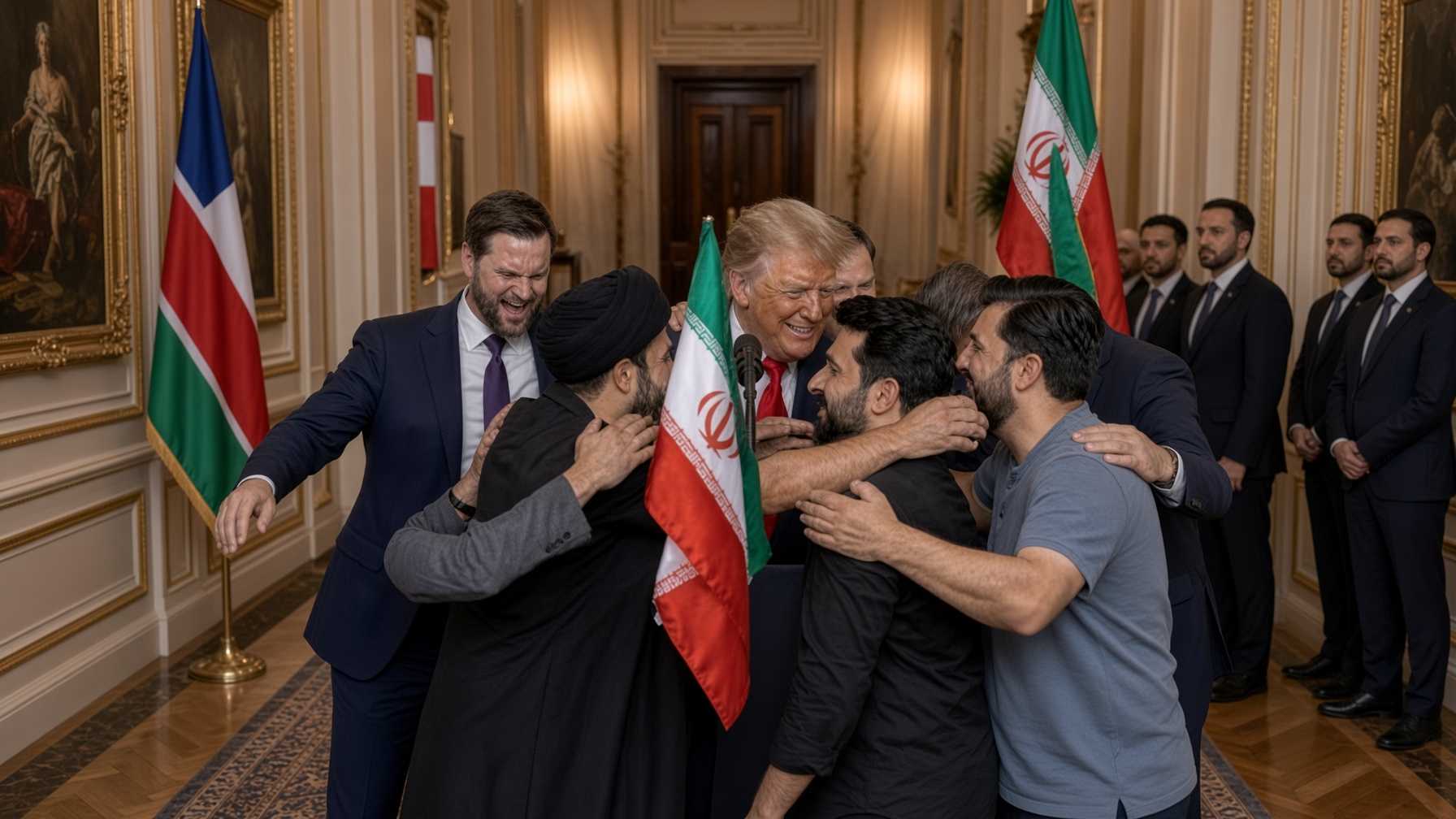
🚨 Trump Pushes for Iran Deal as Hormuz Blockade and Military Clashes Raise Stakes
WASHINGTON — President Donald Trump’s administration is pursuing a diplomatic agreement with Iran aimed at ending the escalating confrontation between Washington and Tehran, with negotiations focusing on nuclear restrictions, sanctions relief and the reopening of the strategically vital Strait of Hormuz.
The proposed framework reflects an effort to combine diplomatic pressure with military deterrence. While officials continue working through draft proposals with regional intermediaries, tensions surrounding maritime security and the presence of U.S. forces have underscored the risks of a breakdown in negotiations.
Secretary of State Marco Rubio, speaking during a diplomatic visit to India, stressed that restoring freedom of navigation through the Strait of Hormuz remains a central U.S. objective. The waterway is one of the world’s most important energy corridors, carrying substantial volumes of oil and other commercial shipments.
“The straits have to be open, they’re going to be open,” Rubio said, describing the restrictions on shipping as unlawful and unsustainable for the international community.
Rubio also acknowledged that indirect discussions facilitated by Qatari intermediaries were continuing. However, he cautioned that substantial work remained before negotiators could transform broad political understandings into a detailed, enforceable agreement.
“There were some talks going on in Qatar today, so we’ll see if we can make progress,” Rubio said, adding that discussions over the precise wording of an initial document could take several days.
President Trump, he indicated, remained committed to securing an agreement but would not necessarily accept a settlement that failed to meet Washington’s objectives.
⚓ Military Pressure Complicates Diplomatic Efforts
Even as diplomatic channels remain open, military tensions continue to threaten the negotiating process.
The reported U.S. naval posture in the region is intended to restrict maritime access to Iranian ports and increase pressure on Tehran to accept Washington’s demands. The presence of American warships and combat aircraft also creates the possibility that a localized confrontation could rapidly escalate into a wider conflict.
The supplied account describes a recent exchange in which Iranian air-defense systems allegedly targeted American tactical aircraft conducting surveillance near a restricted maritime zone. U.S. forces reportedly responded with precision strikes against missile launchers and radar installations along Iran’s coastline.
The details of that specific encounter require independent confirmation. If verified, however, the incident would illustrate the narrow margin separating the current diplomatic effort from renewed large-scale hostilities.
The confrontation follows a reported pause in major aerial bombardments intended to give negotiators room to pursue a settlement. Yet military operations, competing security claims and uncertainty over maritime access continue to place that pause under pressure.
For Washington, maintaining pressure on Iran is intended to strengthen its negotiating position. Tehran, meanwhile, faces the challenge of protecting its strategic interests while seeking relief from economic restrictions that have weighed heavily on its economy.
🇮🇷 Tehran Warns Against Claims of an Imminent Agreement
Iranian officials have acknowledged progress in discussions while rejecting suggestions that a final agreement is close to completion.
Foreign Ministry spokesman Esmaeil Baqaei said negotiators had reached conclusions on a substantial portion of the issues under discussion but cautioned that progress should not be confused with an imminent signing.
“It is correct to say that we have reached a conclusion on a large portion of the issues under discussion,” Baqaei said. “But to say that this means the signing of an agreement is imminent—no one can make such a claim.”
Iran’s negotiating priorities reportedly include sanctions relief, assurances against future military action and arrangements for releasing frozen overseas assets. Tehran also wants clear implementation schedules before making irreversible changes to its nuclear program.
Washington, by contrast, is seeking verifiable restrictions on Iran’s nuclear activities and comprehensive international monitoring to ensure compliance.
These competing priorities remain among the most difficult obstacles to a lasting settlement.
🕊️ Three Major Issues Shape the Proposed Deal
The emerging framework reportedly centers on three interconnected areas: maritime security, nuclear oversight and economic relief.
Under the proposed maritime arrangements, Iran would be expected to cooperate with mine-clearing operations, limit threatening naval activity and guarantee safe passage through the Strait of Hormuz. The United States would, in return, ease its maritime restrictions and restore commercial access to Iranian ports.
On the nuclear front, negotiators are discussing potential limits on uranium enrichment, changes to existing enriched-uranium stockpiles and expanded access for the International Atomic Energy Agency. The objective would be to establish verifiable safeguards against the development of nuclear weapons while providing Tehran with a path toward easing international pressure.
The economic component would link sanctions relief and the release of frozen funds to demonstrated Iranian compliance. Such provisions could give Tehran meaningful financial incentives to accept restrictions, although the scope and timing of any relief remain subject to negotiation.
The precise terms of these proposals have not been independently established as a finalized agreement. Their inclusion in discussions would not, by itself, mean either side has accepted the conditions.
🔴 Critical Days Ahead for Washington and Tehran
The coming days could prove decisive as negotiators attempt to reconcile demands that have long divided the two governments.
A successful agreement could reduce the risk of renewed fighting, improve confidence in international shipping and help stabilize global energy markets. Failure, however, could leave the region facing continued military confrontation, prolonged maritime disruption and further economic uncertainty.
For Trump, the challenge is securing an agreement that addresses American security concerns without allowing negotiations to become an open-ended process. For Iran, the priority is obtaining meaningful economic relief and security assurances without surrendering its core strategic interests.
Despite reported movement in the talks, neither side has publicly established that a comprehensive settlement is complete. Diplomatic progress remains fragile, and developments on the military front could quickly alter the negotiating atmosphere.
For now, the central question is whether Washington and Tehran can turn preliminary understandings into a verifiable agreement before another military incident derails the process. Until the terms are formally confirmed, claims of an imminent breakthrough should be treated cautiously.