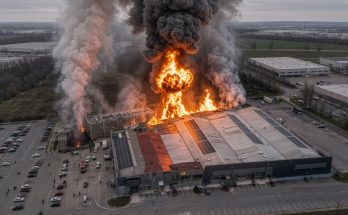
DUBAI — Coordinated waves of Iranian ballistic missile and drone volleys reportedly targeted military facilities hosting American personnel across the Persian Gulf, triggering emergency air-raid protocols, ground shelter-in-place directives, and widespread airspace closures across several Arab partner nations.
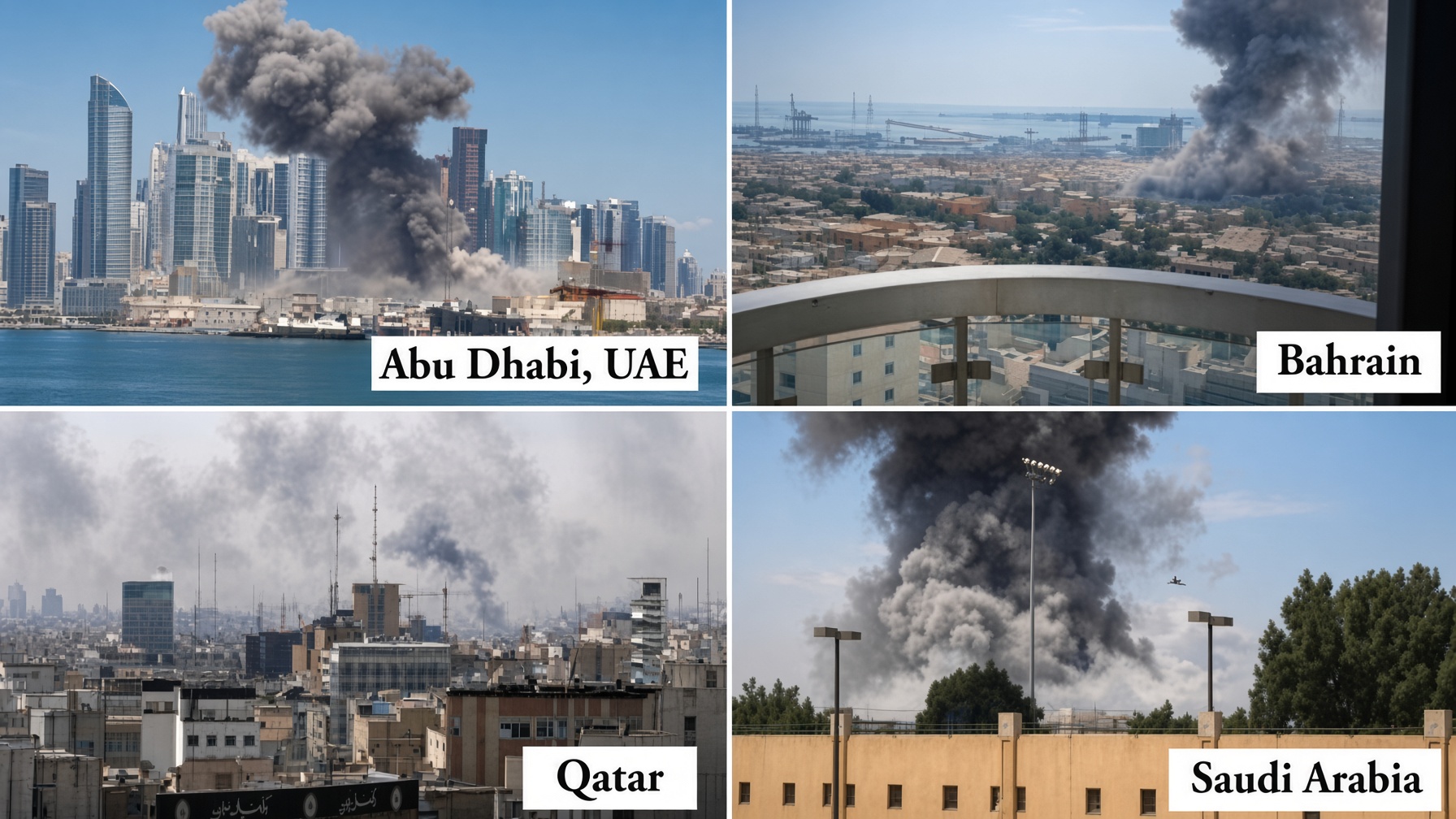
State television in Tehran, citing Islamic Revolutionary Guard Corps (IRGC) commanders, claimed direct hits on American military infrastructure throughout the littoral. The claims coincided with reports of heavy detonations, surface-to-air missile engagements, and rising smoke columns reported across key logistics corridors in the United Arab Emirates, Bahrain, Qatar, and Kuwait.
While Iranian state media described significant damage to coalition assets, defense authorities from the Gulf Cooperation Council (GCC) and the United States have maintained strict information discipline. Detailed assessments concerning casualty figures, the efficacy of terminal missile defenses, and structural damage to hardened facilities remain uncorroborated by independent military monitors.
Terminal Defenses Active Across the Emirates
In the United Arab Emirates, aviation authorities enacted a temporary precautionary shutdown of commercial airspace following reports of a powerful blast felt across municipal districts in Abu Dhabi.
Primary military focus centered on Al Dhafra Air Base, situated roughly 20 miles south of the capital. The facility hosts the U.S. Air Force’s 380th Air Expeditionary Wing and serves as an indispensable logistics node for aerial refueling platforms, airborne early-warning aircraft, and combat air patrols. Witnesses described successive detonations over the surrounding desert as regional Terminal High Altitude Area Defense (THAAD) and Patriot PAC-3 interceptor batteries engaged inbound flight profiles.
The Emirati Interior Ministry advised citizens and foreign residents to remain inside concrete structures, maintain distance from exterior glass, and adhere to official advisories. While debris from intercepted warheads reportedly fell in industrial buffer zones, Emirati civil defense teams moved to secure access perimeters while conducting structural integrity surveys.
Maritime Command on Alert in Manama
Simultaneously, air-defense sirens sounded across Bahrain as emergency services responded to reports of heavy smoke rising near the Al Jufair district of Manama.
The urban sector directly borders Naval Support Activity Bahrain, the forward operational headquarters of U.S. Naval Forces Central Command (NAVCENT) and the U.S. Fifth Fleet. From this hub, coalition forces oversee international maritime security missions spanning the Persian Gulf, the Red Sea, and the Gulf of Oman.
The proximate explosions triggered heightened force-protection conditions across the island kingdom. Naval commanders immediately initiated base lockdown procedures while harbor patrol craft and layered air-defense systems engaged potential sea-skimming threats. Bahraini authorities withheld preliminary damage totals, cautioning the public against unauthorized filming near defense compounds as tactical units conducted security sweeps.
Shelter Directives and Interceptions in Qatar and Kuwait
To the northwest, governments in Qatar and Kuwait initiated rapid emergency countermeasures to protect critical infrastructure:
Al Udeid Air Base (Qatar): Qatar’s Ministry of Interior instructed all residents to shelter in place as the nation’s air-defense network engaged an inbound ballistic trajectory aimed at Al Udeid Air Base. The sprawling base houses the forward headquarters of U.S. Central Command (CENTCOM) and the Combined Air Operations Center (CAOC). Qatar’s Defense Ministry later issued a bulletin affirming that allied interception batteries had neutralized incoming vectors, though airspace closures were enforced to protect civil aviation from descending fragmentation.
Northern Littoral Hubs (Kuwait): In Kuwait, audible explosions echoed near industrial sectors hosting Camp Arifjan and Ali Al Salem Air Base, facilities critical for ground logistics and heavy transport throughout the northern Gulf. Kuwaiti security officials urged the civilian population to avoid non-essential travel and steer clear of military corridors while joint forces verified perimeter security.
Strategic Stakes and Regional Contagion
The coordinated strikes represent a severe escalation in the ongoing confrontation involving Washington, Tehran, and allied Gulf capitals. Tensions have intensified around the Strait of Hormuz—the vital maritime artery handling roughly 20 percent of the world’s petroleum transit—raising immediate concerns over global energy market volatility and marine transit disruptions.
For host nations across the GCC, the strikes highlight the strategic vulnerability of providing basing access to American forces during high-intensity military confrontations. National defense ministries are balancing collective deterrence obligations alongside the urgent imperative to insulate civilian infrastructure from foreign retaliation.
Regional commands continue round-the-clock damage-assessment sweeps, while intelligence analysts scrutinize weapon telemetry and launch coordinates. With diplomatic avenues strained and theater air defenses remaining on maximum alert, regional authorities warned that further operational updates will be released only after site surveys are concluded and verified through official joint military channels.