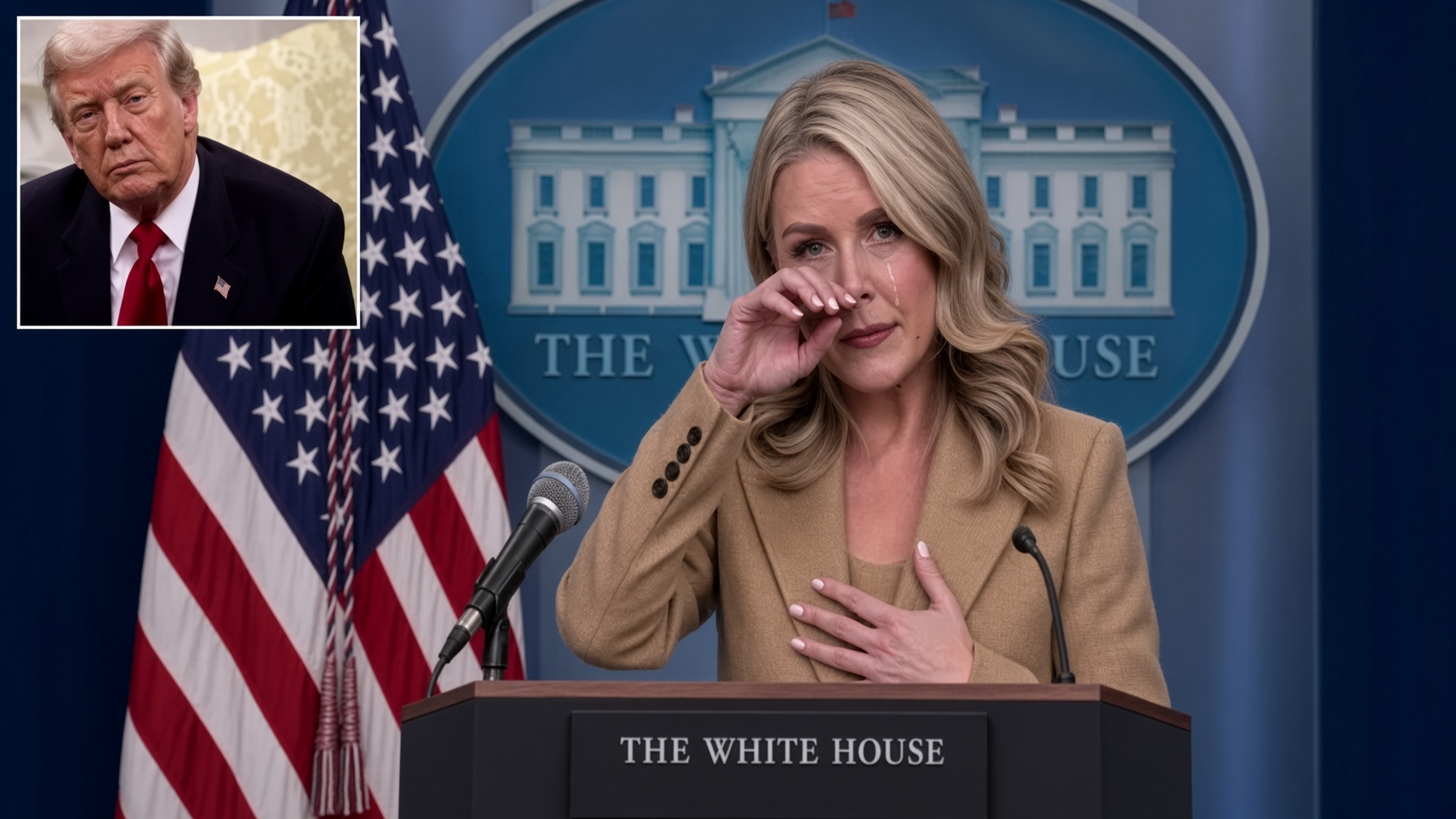
WASHINGTON — White House Press Secretary Karoline Leavitt mounted an aggressive defense of the Trump administration’s overhaul of presidential press operations during an on-stage forum hosted by Axios, arguing that curbing legacy wire privileges modernizes access rather than diminishes executive transparency.
Appearing alongside Axios co-founder Mike Allen, Leavitt framed the administration’s strategy as an overdue corrective to decades of institutional gatekeeping. She drew a sharp contrast between President Donald Trump’s frequent public availability and the comparatively guarded posture of former President Joe Biden, criticizing the Washington press corps for what she characterized as sustained complacency during the previous administration.
The pointed exchange highlighted an escalating institutional clash between the executive branch and legacy news organizations over who holds final authority to determine which reporters board Air Force One, enter the Oval Office, and staff the protective press pool.
Clash Over Wire Service Monopolies
Allen opened the questioning by pressing Leavitt on the White House’s controversial decision to alter the permanent status of the Associated Press within the rotating 13-member presidential press pool.
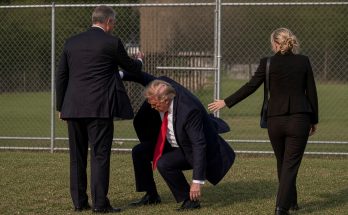
To illustrate the stakes, Allen cited AP Chief Photographer Evan Vucci’s iconic image of Trump raising his fist against an American flag moments after surviving the July 2024 assassination attempt in Butler, Pennsylvania. That photograph—captured because an experienced wire photographer had guaranteed proximity within the tight traveling pool—became an indelible visual record of modern American history.
“Do you worry about history being lost with these new restrictions?” Allen asked.
Leavitt rejected the characterization outright, arguing that the administration’s approach democratizes access for an expanding media landscape.
“I don’t view them as restrictions. We view them as opening access to more outlets, more voices, more news journalists and outlets,” Leavitt said. “We shouldn’t have a few outlets who have a monopoly over the briefing room or over that 13-person press pool that covers the president. And so we’ve actually ensured that more
print outlets like Axios have a greater chance of being part of that 13-person press pool.”
Leavitt pointed out that while thousands of journalists hold White House credentials and hundreds cover the beat daily, legacy arrangements concentrated automatic daily placement within a handful of institutional wire services.
“Why should a single outlet have the privilege of being in that 13-person press pool every single day?” Leavitt said. “The changes we’ve made have actually created more transparency, more accessibility, and greater access for a broad variety of outlets and a diversity of journalists.”
Standoff With the Correspondents’ Association
The discussion quickly shifted to the constitutional and ethical boundaries of presidential press access. Allen quoted directly from a formal White House Correspondents’ Association (WHCA) statement, which asserted that the federal government should not exercise unilateral control over the independent press corps assigned to scrutinize it.
Leavitt pushed back against the association’s traditional role as the exclusive arbiter of pool assignments.
“A small group of journalists who comprise the board of the White House Correspondents’ Association should not dictate who gets to go into the Oval Office and who gets to ride on Air Force One,” Leavitt responded. “There should be equal access for all outlets.”
She dismissed accusations that the changes were calculated to engineer compliant coverage or penalize critical reporting, pointing out that legacy broadcast networks and adversarial newsrooms retain active credentials in the James S. Brady Press Briefing Room.
“If we were trying to make it easier on him or on the administration, we wouldn’t allow some of these fake news leftist outlets in. But we continue to do that,” Leavitt said. “It’s not about ideology. It’s just about increasing the wide variety of outlets that have access. We live in a digital age, and we’re recognizing that at the White House.”
The Comparative Availability Record
To reinforce her argument, Leavitt underscored comparative metrics on presidential accessibility.
According to an Axios historical analysis examining media availability, Biden completed only 164 combined press conferences and interviews at a comparable point in his term—the lowest figure among the past seven chief executives. By contrast, Trump recorded 468 public media engagements over an equivalent period. Historical comparisons demonstrate a wide margin; the previous modern lows belonged to George W. Bush at 248 appearances and Ronald Reagan at 262.
While media analysts caution that informal hallway exchanges and rapid-fire press conferences differ in depth from extended sit-down interviews, the Trump administration has leveraged the data to portray its posture as uniquely transparent.
As the White House reshapes longstanding protocols, the ongoing standoff signals a structural realignment in capital reporting, setting the administration’s preference for broad digital disintermediation against traditional demands for independent, institutional press protections.