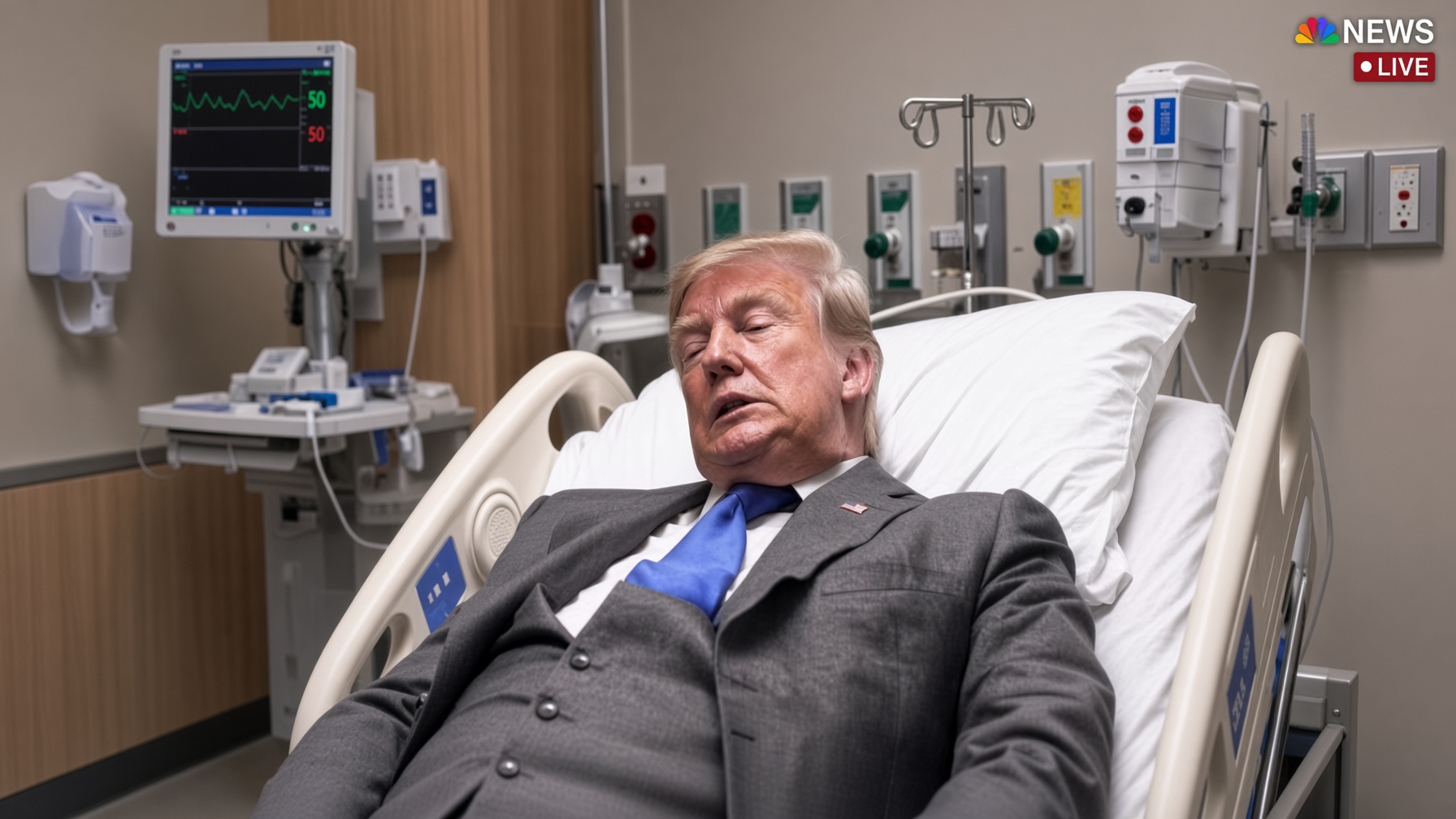
Fact Check: Viral Claims of New Trump Shooting in D.C. Completely Unfounded
WASHINGTON — A wave of alarming social media claims asserting that President Donald Trump was shot in the nation’s capital “minutes ago” is entirely fabricated, according to official records, law enforcement monitors, and independent newsroom reviews.
The posts, which surged across X, TikTok, and YouTube over the weekend, generated tens of thousands of shares within hours. Yet as of Sunday, a comprehensive review of reporting from major global wire services, including Reuters and The Associated Press, confirmed that no such attack occurred. Routine administrative updates from the White House proceeded without disruption, and federal agencies maintained their standard weekend posture.
In modern crisis reporting, the complete absence of emergency alerts is decisive. An incident targeting a commander-in-chief in the District of Columbia would trigger immediate, visible, and unmistakable protocols: the United States Secret Service would initiate rapid lockdowns, trauma centers would clear airspace, the White House Press Pool would dispatch urgent bulletins, and continuous live broadcasts would pre-empt worldwide programming. None of these mechanisms were activated.
Anatomy of an Online Panic
The velocity of the rumor underscores a recurring flaw in digital information ecosystems: unverified assertions frequently outrun journalistic verification. The recent posts relied heavily on classic misinformation hallmarks, deploying all-caps breaking news banners, misleading captions, and recycled footage stripped of date stamps and geographical context.
Video files posted to open platforms do not constitute verification on their own. Online actors frequently repackage archival footage, synchronize unrelated sirens or shouting audio over still photos, or label training drills as active attacks. When algorithmic recommendation engines prioritize high-arousal content—particularly violence, political upheaval, and mortal peril—fabrications achieve mass distribution long before corrective reporting gains traction.
Journalistic protocols dictate that extraordinary claims, particularly those carrying severe constitutional and national security implications, require independent corroboration from multiple authoritative sources before publication. In this instance, no law enforcement agency, hospital network, or congressional official substantiated the rumors.
The Echoes of Past Assassination Attempts
Much of the viral confusion stems from bad-faith actors weaponizing authentic, historical footage from genuine security crises. Trump was indeed the target of an assassination attempt on July 13, 2024, during an outdoor campaign rally in Butler, Pennsylvania.
During that incident, a 20-year-old gunman positioned on a nearby warehouse roof discharged multiple rounds from an AR-style rifle. Trump was struck in the right ear, one spectator was killed, and two others were critically injured before a Secret Service counter-sniper neutralized the shooter.
Photographs of that event—depicting a bloodied Trump raising his fist as tactical agents encircled him—were among the most thoroughly documented news images of the decade. Consequently, archival footage from Butler remains prime material for bad actors seeking to create deceptive “breaking news” packages. Users routinely crop dates, re-encode files, and present 2024 imagery as an ongoing event in Washington.
Similarly, online aggregators have occasionally conflated other close calls, such as the September 2024 episode at Trump International Golf Club in West Palm Beach, Florida, where Secret Service agents spotted a rifle barrel protruding through the fence line. In that case, agents opened fire on the suspect before he could discharge a round; Trump was unharmed, and no exchange of gunfire struck the former president.
Routine Operations Continue Unbroken
Far from managing an emergency medical evacuation, federal authorities and global press bureaus spent Sunday documenting conventional executive and foreign policy developments. Wire service coverage centered on the administration’s latest legal disputes over state mail-ballot rules, ongoing economic negotiations, and international diplomatic maneuvers amid foreign conflict.
Social media platforms have increasingly rolled out community-led notes and fact-checking markers to flag recurring iterations of the shooting claim. However, media literacy researchers caution that audience vigilance remains the first line of defense against synthetic panics.
When high-stakes breaking news surfaces online, the standard of proof rests entirely on institutional confirmation. Until the Secret Service, the White House medical unit, or established news agencies report otherwise, viral claims declaring that Trump has been shot in Washington remain unequivocally false.



