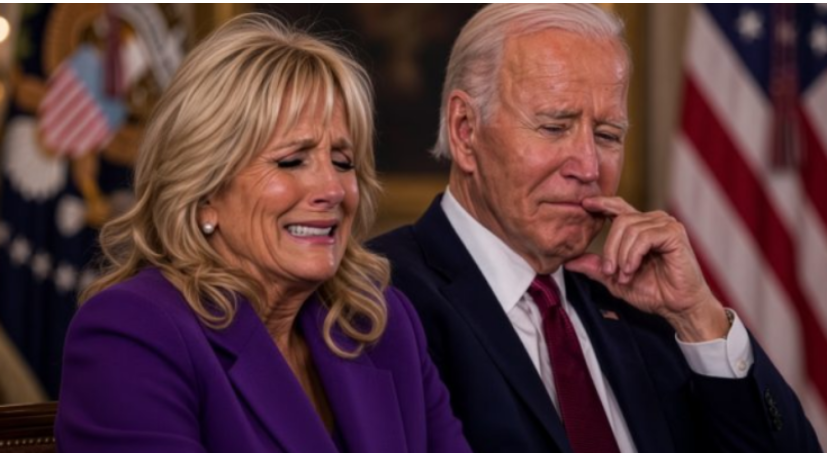
PHILADELPHIA — Ashley Biden, the youngest daughter of former President Joe Biden, has filed for divorce from her husband of more than 13 years, Dr. Howard Krein, according to court documents filed in Philadelphia.
The legal petition, initially reported by The Philadelphia Inquirer, was formally entered on August 11, 2025, bringing an end to a high-profile marriage that linked one of the nation’s most prominent political dynasties with Philadelphia’s medical and academic community.
Ashley Biden, 44, a social worker and activist, married Krein, an otolaryngologist, plastic surgeon, and associate professor at Thomas Jefferson University, in June 2012. The couple held an intimate ceremony at St. Joseph on the Brandywine Catholic Church in Greenville, Delaware, the parish where the Biden family has gathered for generations. The pair had originally been introduced in 2010 by Ashley’s late brother, former Delaware Attorney General Beau Biden.
Under Pennsylvania domestic relations procedures, initial filings provide minimal public documentation regarding the underlying grounds for the dissolution, citing only an irretrievable breakdown of the marriage. Representatives for the Biden family and Dr. Krein have declined to comment on the record regarding the personal filing.
Around the time of the submission, Ashley Biden addressed life transitions on social media, sharing an image of herself walking through a park alongside reflections on “new beginnings” and establishing personal boundaries. Throughout her father’s eight-year vice presidency and four-year term in the Oval Office, she maintained a deliberately guarded personal profile, emerging only for major milestone events, notably delivering an emotional introduction for her father at the 2024 Democratic National Convention in Chicago.
House Inquiries Target Executive Autopen Signatures
The personal transition for the Biden family arrives against a backdrop of escalating political and legal scrutiny centered in Washington, where congressional Republicans have intensified a post-presidency investigation into Joe Biden’s executive actions.
The primary point of contention involves the former administration’s reliance on an autopen—a mechanical device designed to replicate a signature—to execute official presidential directives, specifically dozens of commutations and pardons issued during the final months of Biden’s tenure.
The House Committee on Oversight and Accountability, chaired by Rep. James Comer (R-Ky.), escalated the inquiry following an October 2025 investigative report. The panel alleged that the use of mechanical signatures on critical executive orders, clemency grants, and administrative directives warranted a comprehensive review to determine whether the 46th president had personally reviewed and authorized each document. The committee subsequently forwarded a formal referral to the Department of Justice requesting an administrative and legal assessment of the signatures’ validity.
Legal historians and constitutional scholars note that mechanical signatures have been deployed by chief executives for decades without legal incident. In 2005, the Justice Department’s Office of Legal Counsel issued a binding opinion concluding that a president may lawfully delegate the physical execution of their signature using an autopen, provided the underlying decision was personally authorized by the commander-in-chief.
The central legal debate hinges entirely on establishing that chain of direct intent. The former president has forcefully defended the integrity of his clemency portfolio. In public statements, Biden maintained that every pardon and commutation issued under his authority was the product of his direct review and deliberate instruction, specifically affirming that the authorization of the signature device followed long-standing White House protocols.
Revived Debate Over Executive Capacity
Despite the former administration’s reassurances, congressional investigators have framed the autopen inquiry as part of a wider retrospective on Biden’s governance and executive stamina during the conclusion of his term.
The controversy has renewed focus on findings published in early 2024 by Special Counsel Robert Hur regarding the handling of classified materials. While Hur’s final report declined to recommend criminal charges, it cited interview transcripts describing lapses in Biden’s memory concerning specific timelines and administrative dates. Those assessments quickly became central to the national political debate that ultimately culminated in Biden’s departure from the 2024 presidential campaign following a fraught debate performance in Atlanta.
Comer and committee allies argue that the autopen investigation represents a legitimate legislative effort to verify administrative transparency, suggesting that procedural safeguards around presidential authority require statutory tightening. Democratic members of the committee, conversely, have dismissed the inquiry as a partisan exercise, accusing the majority of attempting to litigate settled executive precedents and diminish a former president’s legal record.
Separate Realities for a Former First Family
While both developments have drawn significant national attention, legal analysts and political observers stress that the private dissolution of Ashley Biden’s marriage and the congressional inquiries in Washington represent completely disconnected tracks. There is no evidence suggesting any overlap between the family’s domestic affairs and the procedural disputes under review on Capitol Hill.
For Ashley Biden, the court proceedings in Philadelphia represent the closing chapter of a private, decade-long partnership conducted largely away from the political spotlight. For the former president, the legislative challenges in Washington ensure that the final operational days of his administration will remain under intense political and legal examination for months to come.