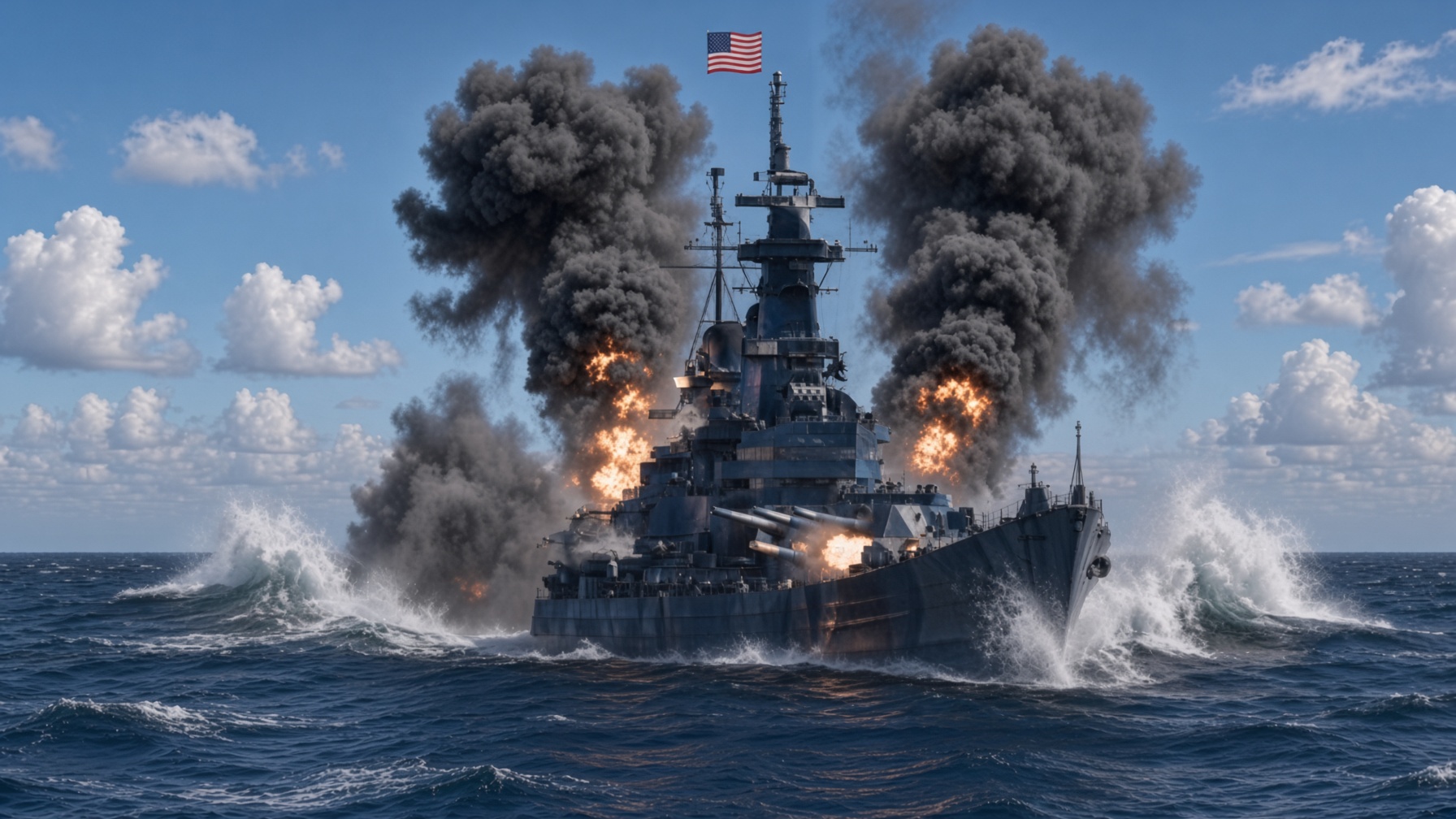
WASHINGTON — A high-stakes maritime encounter between American and Iranian naval forces escalated into direct, live-fire combat in Middle Eastern waters when an Iranian surface craft closed within hazardous proximity of the aircraft carrier USS Abraham Lincoln, prompting an American attack helicopter to neutralize the vessel with guided missiles, according to two U.S. defense officials familiar with initial operational reports.
The engagement unfolded after warning procedures and heavy deck gun fire from an escorting American warship failed to halt the approaching vessel, forcing commanders to scramble air support. The clash represents one of the most serious direct kinetic confrontations between U.S. naval forces and Iranian assets in recent months, demonstrating the acute fragility of military deterrence across vital regional sea lanes.
A Graduated Tactical Response Turns Lethal
According to defense officials speaking on condition of anonymity to discuss sensitive ongoing operations, the Iranian craft initiated an aggressive, high-speed approach toward the perimeter of the carrier strike group’s inner defensive perimeter. Watchstanders on the carrier and its escorts issued multiple standardized warnings, transmitting bridge-to-bridge radio hails, sounding acoustic alarms, and launching pyrotechnic warning flares.
When the intruding boat disregarded all non-lethal signals and sustained its intercept vector, an American guided-missile destroyer operating within the screen cleared its forward 5-inch/54-caliber Mark 45 lightweight gun mount for action.
The warship delivered multiple high-explosive 5-inch rounds into the water near the craft. It remains operationally ambiguous whether the crew fired the massive munitions as deliberate warning shots across the vessel’s bow or whether rolling sea states and high-speed maneuvers prevented the naval gun’s automated fire-control solution from scoring disabling direct hits on the vessel’s propulsion.
As the vessel continued to close the distance, carrier tactical commanders escalated immediately, scrambling an armed rotary-wing platform—an MH-60R Seahawk configured for surface combat operations—already airborne on alert patrol.
The helicopter crew acquired the Iranian surface craft, locked target solutions, and fired two AGM-114 Hellfire precision-guided air-to-ground missiles in rapid succession. Both laser-guided munitions scored direct hits on the craft.
Neither U.S. Central Command (CENTCOM) nor the Iranian Ministry of Defense has issued formal battle-damage assessments detailing the structural destruction of the boat or confirming casualties among its crew. It remains unconfirmed whether the stricken vessel sank immediately or was left burning and adrift in international waters.
Capital Ship Vulnerability and Counter-Swarm Doctrine
The nuclear-powered USS Abraham Lincoln operates as the flagship of Carrier Strike Group 3, deployed to CENTCOM’s maritime area of operations to project air power, deter asymmetric regional aggressors, and secure commercial shipping routes through the Persian Gulf, the Gulf of Oman, and the northern Arabian Sea.
While an aircraft carrier houses a lethal complement of strike fighters, the capital ship relies entirely on concentric rings of escort ships for close-in surface and subsurface defense. Cruising alongside the Lincoln are Arleigh Burke-class guided-missile destroyers, such as the USS Spruance and USS Michael Murphy, equipped with the Aegis Combat System, vertical launch interceptor cells, and automated Close-In Weapon Systems (CIWS).
Unidentified or hostile vessels pressing into visual proximity with an aircraft carrier breach long-standing maritime separation zones and trigger immediate, tiered defensive responses. In the Middle East theater, American tactical action officers operate under enhanced alert postures due to the widespread proliferation of remote-controlled, uncrewed explosive boats (USVs) and fast-attack swarm craft operated by Iranian forces and regional proxy militias.
Given the speed of such threats, naval doctrine affords commanders minimal latency to determine hostile intent before executing lethal defensive measures.
Department of Defense spokespersons declined to provide official on-the-record statements regarding the specific coordinates of the engagement, the exact escort destroyer that deployed the 5-inch cannon, or the condition of the Iranian crew.
Precision Ordnance and the Looming Risk of Broader Conflict
The tactical progression from a warship’s deck gun to airborne Hellfire missiles highlights the lethal flexibility of modern carrier air wings when confronting littoral incursions.
While the Mark 45 cannon remains formidable against shore installations and larger surface combatants, tracking erratic, wave-skimming skiffs at short range presents significant fire-control friction. By contrast, the semi-active laser guidance system of the rotary-wing AGM-114 Hellfire allows aviators to surgically disable or destroy small combat craft from distance, making the Seahawk the primary counter-swarm asset in the Navy’s defensive arsenal.
The engagement unfolds against the backdrop of sustained geopolitical confrontation between Washington and Tehran. For years, Islamic Revolutionary Guard Corps Navy (IRGCN) speedboats have executed aggressive, close-quarter passes against American commercial and military traffic in narrow straits, maneuvers U.S. naval leaders have repeatedly condemned as unsafe and unprofessional.
CENTCOM tactical analysts are reviewing multi-spectral sensor logs, radar track records, and cockpit video captures to establish an exact timeline of the engagement. As both powers maintain heavy military postures across contested waterways, the strike underscores that even localized miscalculations can instantaneously breach the barrier separating maritime patrols from open armed conflict.



