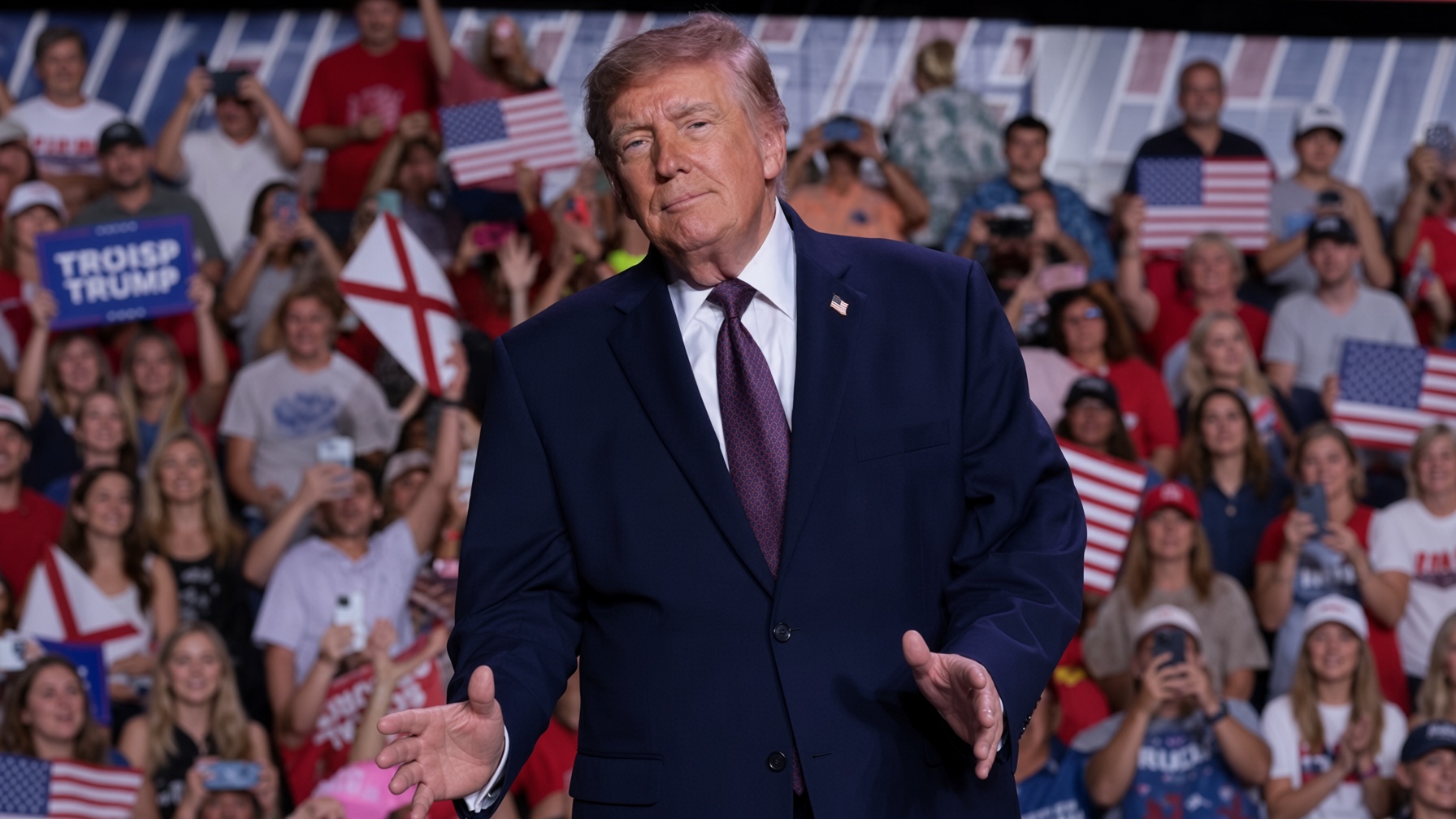
MOBILE, Ala. — Addressing thousands of enthusiastic supporters in Mobile, Donald Trump delivered an impassioned campaign speech centered on themes of patriotism, national unity, and cultural pride, casting the upcoming midterm elections as a pivotal referendum on American identity and loyalty.
Taking the stage to roaring applause, Trump delivered what quickly emerged as the defining line of the event: “America does not belong to those who hate it. America belongs to the people who love it.”
The remark encapsulated Trump’s enduring populist appeal, framing the stakes of key midterm contests not merely around policy differences or congressional procedure, but as an existential battle over fundamental national values. Throughout his address, Trump drew sharp contrasts between everyday working-class Americans and what he characterized as a detached political and cultural establishment.
National Pride and the Ballot Box
Trump emphasized that true governance begins with an unwavering commitment to the nation’s heritage, constitutional principles, and civic traditions. He argued that public institutions have increasingly been influenced by voices critical of America’s founding principles, urging attendees to use the ballot box to defend traditional values.
“America does not belong to those who hate it. America belongs to the people who love it.”
The rally underscored the central strategic pillar of Trump’s campaign appearances: mobilizing the party’s grassroots base through emotionally resonant appeals to national pride. In highlighting issues ranging from domestic economic renewal to border security and school curricula, the former president tied diverse political disputes back to a central premise—that genuine stewardship of the nation requires deep affection for its foundational ideals.
A Familiar Playbook in Crucial Midterm Races
Trump’s appearance in Mobile serves as a familiar playbook for high-stakes midterm battles across the country. Alabama has long served as a stronghold of populist conservative support, providing an energized backdrop intended to generate momentum and media coverage beyond state lines.
Local party officials and candidates echoed Trump’s message throughout the afternoon, praising the emphasis on loyalty and tradition. Mobilizing conservative voters in deep-red states remains critical not only for maintaining regional dominance, but also for building donor enthusiasm and voter turnout networks capable of influencing contested battlegrounds nationwide.
Critics and political opponents have frequently challenged this line of rhetoric, arguing that defining political disagreement through the lens of patriotism risks deepening partisan polarization and alienating reform-minded voters. They argue that dissent and critique are core components of democratic participation rather than evidence of hostility toward the nation.
Supporters at the Mobile rally, however, saw the remarks as a direct, unapologetic defense of their worldview. For the attendees waving flags and sporting campaign merchandise, the rhetoric resonated as a validation of their dedication to community, faith, and country.
With midterm election day rapidly approaching, Trump’s address in Alabama indicates that conservative campaign strategy will continue to lean heavily into cultural sovereignty, populist defiance, and an uncompromising appeal to American patriotism.